China Top Drone Carrying Case Manufacturers?
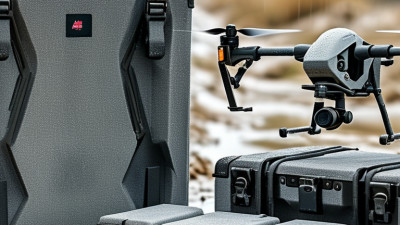
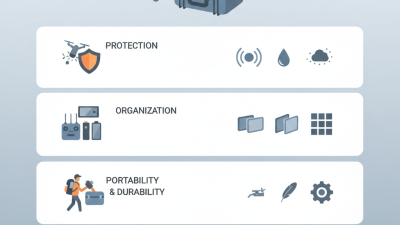
Choosing reliable China Top Drone Carrying Case Manufacturers requires more than comparing product photos and quoted prices. A professional Drone Carrying Case should protect sensitive equipment during transport, storage, and repeated field use. This introduction explores manufacturers with experience in molded cases, custom foam inserts, waterproof sealing, reinforced corners, and impact-resistant materials. It also considers how factories manage design drawings, sample approval, production consistency, and quality inspection.
Details matter.
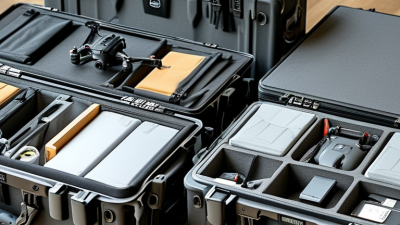
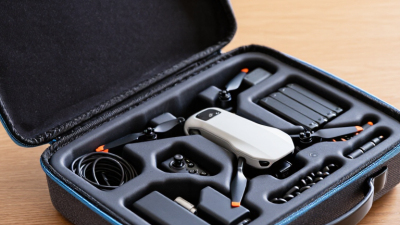
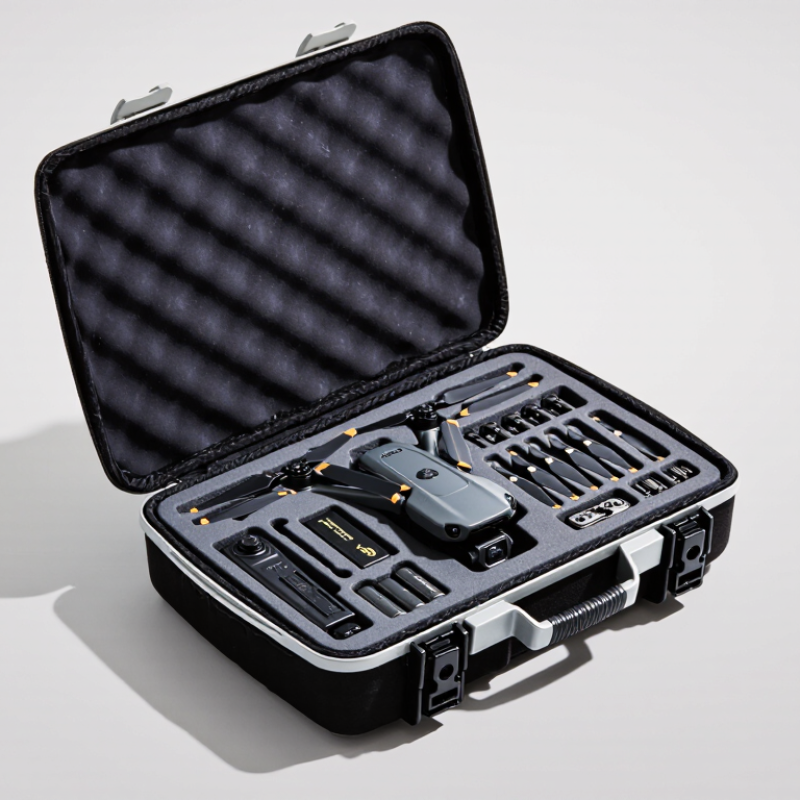
A well-designed case should hold the drone, controller, batteries, chargers, propellers, and small tools without unnecessary movement. Closed-cell foam can reduce vibration, while an accurate CNC-cut insert improves fit and presentation. Buyers should also review hinge strength, latch performance, handle comfort, wheel durability, and environmental protection claims. Reliable suppliers can explain their testing methods and provide clear specifications instead of vague promises. Certifications may support credibility, but they should match the actual product and destination market.
This guide compares selected Chinese manufacturers through practical purchasing criteria, including manufacturing capability, customization support, communication quality, lead times, packaging, and after-sales service. Factory audits, product samples, and production records can reveal more than online listings. Still, no ranking remains perfect. Supplier capacity can change, and an impressive sample may not represent every batch. Buyers should confirm current information directly, request written quality requirements, and test cases under realistic transport conditions. The strongest manufacturer is not always the cheapest. It is the one that consistently delivers protection, usable design, and dependable support for the intended drone system.
China’s Drone Case Market: Key Data, Standards, and Manufacturer Types
China Top Drone Carrying Case Manufacturers?
China’s drone case market is broad, but its public data remains fragmented. Trade statistics often combine drone cases with general equipment containers. This makes exact market-size comparisons unreliable. In practical sourcing, buyers usually compare material, foam layout, order quantity, and testing records instead.
Manufacturers generally fall into four groups:
injection-molded case producers
suit higher volumes and repeat dimensions.
aluminum case workshops
offer a professional appearance but may add weight.
custom foam integrators
are valuable when batteries, controllers, antennas, and landing gear need separate protection.
trading companies
can simplify communication, although production visibility may be limited.
Standards deserve careful review. Ask whether the case has documented IP protection, such as IP54 or IP65, rather than relying on a marketing claim. Drop, vibration, temperature, and humidity tests may reference IEC 60068 methods or ASTM distribution procedures. Foam should resist compression and recover after repeated opening.
Fit matters most.
A case can pass a basic drop test yet allow internal movement during transport. I have seen neat samples fail because hinges loosened after repeated cycles. That weakness is easy to miss.
Suppliers should provide drawings, material specifications, inspection photos, and batch records. A small pilot order is safer than trusting a polished catalog. Even then, testing one loaded case may not represent every production batch.
Case Materials: 4–8 mm PP Shells, ABS, Aluminum, and EPP Foam
China Top Drone Carrying Case Manufacturers?
Case Materials: 4–8 mm PP Shells, ABS, Aluminum, and EPP Foam
Choosing among China’s top drone carrying case manufacturers requires more than comparing prices. Material selection determines how well a case handles moisture, dust, vibration, and repeated transport. Each option behaves differently.
A 4–8 mm PP shell offers practical impact resistance without excessive weight. Thicker PP can protect larger drones, batteries, and controllers during rough handling. ABS cases provide a cleaner finish and firm structure, but they may crack under severe cold or sharp impact. Aluminum adds strength and a professional appearance. However, it increases weight and may dent instead of flexing. EPP foam is lightweight, shock-absorbing, and useful for custom interior protection. It should hold each component firmly without pressing against camera lenses or delicate arms.
Reliable manufacturers should provide material specifications, sample measurements, hinge details, latch tests, and foam density information. Check whether the actual wall thickness matches the drawing. It often does not. A practical inspection should include a loaded drop test, moisture exposure, and repeated opening cycles. Fit matters. A case that looks strong can still allow batteries to move inside. Early samples may impress, yet production consistency can weaken later. That risk deserves attention. Ask for inspection records, packaging details, and clear replacement procedures before placing a large order.
China Top Drone Carrying Case Manufacturers? – Case Materials: 4–8 mm PP Shells, ABS, Aluminum, and EPP Foam
| Material |
Typical Case Thickness |
Approx. Density |
Impact & Structural Behavior |
Water & Chemical Resistance |
Practical Temperature Range |
Relative Weight |
Best-Fit Drone Case Use |
| PP Shell |
4–8 mm molded shell |
Approx. 0.90–0.91 g/cm³ |
Good impact resistance and flexural toughness; can absorb shocks without permanent cracking in many designs. |
Very low water absorption; generally resistant to dilute acids, alkalis, and many common chemicals. |
Approximately −20°C to 80°C for common applications; grade and load conditions affect limits. |
Low |
Reusable protective cases requiring a balance of low weight, durability, and cost. |
| ABS |
Typically 2–5 mm shell or formed panel |
Approx. 1.03–1.07 g/cm³ |
Rigid and easy to thermoform; good surface hardness and impact performance, but can become brittle at low temperatures. |
Low water absorption; suitable for many household chemicals, but vulnerable to some solvents. |
Approximately −20°C to 70°C for typical case applications. |
Low to medium |
Rigid presentation cases, formed equipment cases, and applications needing a smooth molded finish. |
| Aluminum |
Typically 1–2 mm sheet or formed panel |
Approx. 2.70 g/cm³ |
High rigidity and good dimensional stability; resists crushing, although thin panels may dent under concentrated impact. |
Naturally forms a protective oxide layer; corrosion resistance depends on alloy, finish, seams, and exposure conditions. |
Approximately −40°C to 100°C or higher, depending on seals, coatings, adhesives, and hardware. |
High |
Heavy-duty transport cases where rigidity, premium appearance, and long service life are priorities. |
| EPP Foam |
Typically 10–30 mm protective insert or molded liner |
Approx. 20–250 kg/m³, depending on grade |
Excellent energy absorption, lightweight cushioning, and partial recovery after repeated impacts. |
Closed-cell structure provides low water absorption and good resistance to moisture; surface protection may still be required. |
Approximately −40°C to 110°C for many grades; exact limits depend on density and exposure duration. |
Very low |
Custom-fit cushioning for drones, batteries, controllers, propellers, cameras, and other accessories. |
Material-selection note: A common drone-case construction combines a rigid PP, ABS, or aluminum exterior with a CNC-cut or molded EPP interior. Actual performance depends on material grade, wall geometry, corner reinforcement, hinges, latches, gasket design, and test conditions.
Drone Case Selection Using Payload, Dimensions, Foam Density, and Test Data
Choosing a drone carrying case starts with payload, not appearance. A 12-kilogram aircraft can require a case rated above 18 kilograms after batteries, controllers, cables, and accessories are added. This working margin reduces latch strain and helps prevent foam compression. Industry forecasts, including Drone Industry Insights’ 2024 market report, show continued growth in commercial drone operations. More equipment will travel through harsher logistics networks.
Measure the folded drone, propellers, battery packs, and charging unit separately. Leave 20–30 millimeters around fragile components, but avoid oversized cavities. Excess space allows movement during impact. The International Safe Transit Association’s 3A procedure evaluates drops, vibration, and compression in parcel distribution. ASTM D4169-23 also provides distribution-cycle testing guidance. Ask manufacturers for actual test records, not only “military-grade” wording.
Foam density matters. Closed-cell polyethylene around 45–60 kg/m³ suits many medium-weight systems, while heavier assemblies may need firmer support. Density alone is not enough. Compression set, thickness, and recovery performance also affect protection. Some suppliers can provide compression and drop-test curves. Request them. A case that passes one empty-drop test may fail with a concentrated battery load. I have seen beautiful foam layouts weaken at thin corners. That detail is easy to miss. Good manufacturers should disclose internal dimensions, payload limits, foam specifications, latch-cycle results, and test conditions. Their data may still be incomplete, so buyers should inspect samples and repeat tests with their own payload.