10 Tips for Choosing the Best Cable Storage Bag?
A Cable Storage Bag can make a cluttered drawer feel manageable—or become one more place where tangled cords disappear. The right choice depends on what you actually carry: charging cables, adapters, earbuds, or longer cords for travel. A useful bag should protect delicate connectors, keep small items visible, and fit comfortably inside your backpack or desk drawer. Looks matter, too, but only after function. A sleek case is frustrating if its zipper catches or its pockets swallow small adapters.
For this guide, fictional cable-storage designer Maya Chen offers a clearly illustrative rule: “Choose a bag that makes every cable easy to find and easy to put back.” That line is editorial, not a verified quotation. It points to the details worth checking: pocket layout, closure quality, padding, material, and overall size. Picture reaching for a charger at a crowded airport gate. Can you find it without emptying the bag? Small details matter. Still, no organizer works perfectly for every setup. I have seen roomy cases encourage people to pack too much, which can make even a good layout awkward. The tips ahead weigh practical trade-offs, so you can choose a Cable Storage Bag that suits your devices, routine, and packing habits—not just its product photos.
Assess Your Cable Collection and Storage Needs
10 Tips for Choosing the Best Cable Storage Bag?
Assess your cable collection before choosing a bag. Lay everything out: charging leads, headphones, adapters, power cords, and the odd cable you cannot identify. Count them, then note the longest cable and bulkiest adapter. This quick audit reveals whether you need slim pockets or deeper compartments. A bag that looks roomy online may still bunch thick cords at the zipper.
Tip: Coil each cable loosely and measure its length. Keep frequently used items together, but set aside damaged or obsolete cables for proper recycling. The Global E-waste Monitor 2024, published by UNITAR and the International Telecommunication Union, reports 62 million tonnes of electronic waste generated worldwide in 2022. Only 22.3% was documented as formally collected and recycled. That figure covers all e-waste, not cables alone, but it is a useful reminder to avoid storing unwanted electronics indefinitely.
Think about where the bag will live. A desk drawer may suit a flat organizer; a backpack calls for light padding and secure elastic loops. Check pocket widths against bulky plugs, and leave room for a small power bank if you carry one. Don’t pack it tight. Cables tangle, and I sometimes keep one “spare” lead that never fits the device I need. A little unused space is practical, not wasteful.
Choose a Bag Size and Layout That Fit Your Gear
A cable bag should fit the gear you carry, not every cable you own. IDC’s Worldwide Quarterly Mobile Phone Tracker estimated 1.24 billion smartphone shipments in 2024, reflecting how common portable-device use has become. That figure does not tell you what size bag to buy, though; your own charger, headphones, power bank, and adapters matter more. Lay them out before shopping. Measure the longest item, then allow room for plugs and bends. A cable forced into a tight loop may kink, while a bag that is too large lets small adapters rattle around.
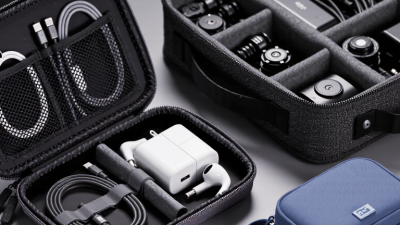
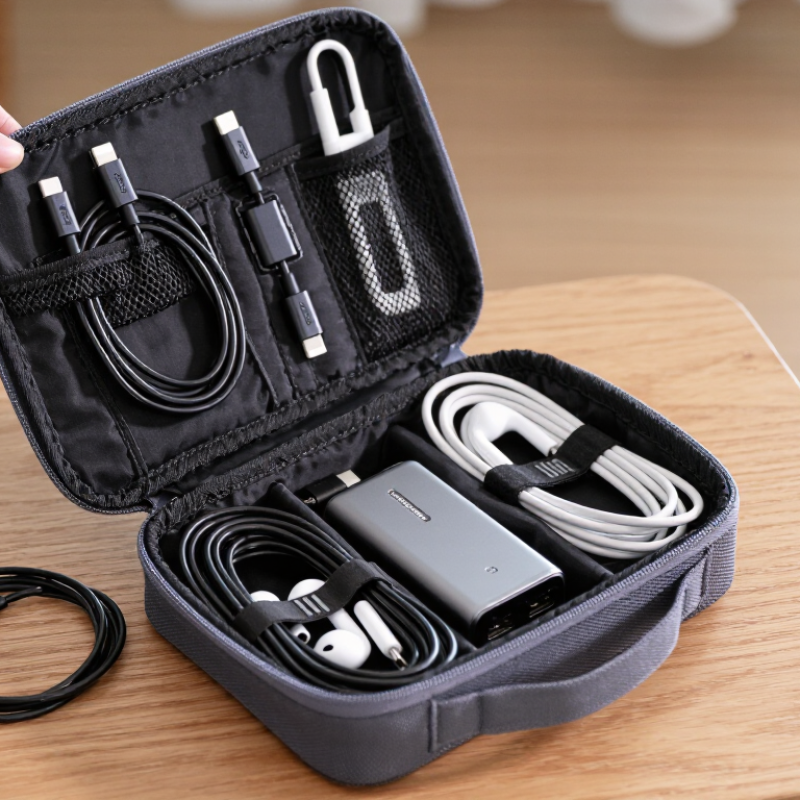
Think about layout as carefully as capacity. A shallow bag with elastic loops suits a few frequently used cables. Mesh pockets work better for chunky wall chargers, memory cards, and oddly shaped adapters. Keep the power bank in a separate compartment, so its weight does not crush delicate connectors. Check whether the pockets still close with your actual gear inside. Sounds obvious. It’s easy to miss.
A practical test is to pack the bag as you would for a commute or trip, then find one cable without unpacking everything. If you need to empty the pouch, the layout is probably wrong for your routine. I tend to underestimate how much space plugs take up, especially when cables are coiled. Leave a little spare room, but not so much that the bag becomes a drawer. A small amount of trial and error is normal.
Compare Materials, Padding, and Cable Protection
A cable storage bag should protect what you carry without becoming another bulky item. Compare the outer material first. Woven nylon is light and often resists everyday scuffs, while polyester can offer a firm, easy-to-clean surface. A soft fabric pouch feels pleasant, but may provide little defense against sharp objects in a crowded backpack. Check the stitching and zipper, too. Weak seams can fail before the fabric wears out.
Padding matters most when cables share space with chargers, adapters, or small tools. Thin foam can reduce scratches and minor knocks, but it will not make a bag crush-proof. Look for padding around the sides and base, especially if you carry heavier power accessories. Too much padding has a cost. It eats space, and I would not assume a thick case is automatically safer.
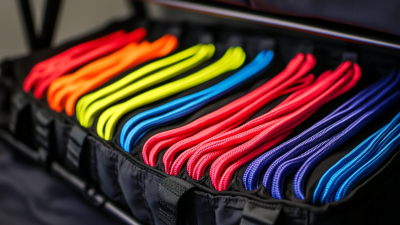
Cable protection also depends on the interior layout. Elastic loops keep cords from tangling, while separate pockets stop metal connector ends from rubbing against screens or delicate plugs. A smooth lining helps prevent snags; a pale lining makes small items easier to spot. Test the fit with your actual cables. Some bags look organized in product photos, yet leave long cords bent tightly at the ends. That detail is easy to miss. Check whether the bag closes without pressure on the plugs, and leave a little room for the cable you use most.
Check Compartments, Closures, and Portability
A good cable storage bag should keep small items visible, separated, and easy to reach.
Look for a mix of mesh pockets, elastic loops, and one larger compartment. Mesh helps you spot an adapter without emptying the bag. Loops can hold charging cables in place, though very thick cords may not fit. Count the devices you actually carry before choosing a layout; extra pockets can become clutter.
Closures matter more than they seem.
A zipper should open smoothly and stay shut when the bag is tilted. Test it with a power adapter inside, since hard edges can press against the teeth. A flap or elastic strap may work for quick access, but loose items can slip out. Check that seams around pockets feel secure. Small details matter.
Portability depends on the bag’s weight, shape, and handle.
A slim design slides into a backpack sleeve, while a compact handle makes it easier to grab from a desk drawer. If you travel often, try packing the bag alongside a notebook or tablet. Does it bend awkwardly? Does the zipper snag? I have found that a bag that looks roomy online can feel cramped once cables are coiled. Choose for your usual load, not an imagined one. It may take a week to learn which pockets you actually use.
Evaluate Durability, Quality, and Overall Value
A cable storage bag should handle repeated packing, not just look sturdy on a shelf. Check the stitching where handles meet the body; these points take extra strain when the bag is full. Check the seams. A smooth zipper should move without catching fabric, even when small adapters press against it. If possible, test the zipper with one hand and inspect whether its pull feels secure.
Material quality matters, but thicker fabric is not always better. A padded interior can cushion chargers and protect cable ends from knocks, while a stiff shell may take up more room in a backpack. Look for dividers that keep tangled cords apart, plus pockets sized for bulky power adapters. A water-resistant exterior can help with light spills, though it does not make the bag waterproof. That distinction is easy to overlook.
To judge overall value, compare what the bag holds with how often you will carry it. A low-cost option may be enough for a few charging cables, but frequent travel can expose weak seams or flimsy elastic loops. Consider whether the layout fits your actual gear, not an idealized collection. I would leave some space for one unexpected cable; bags packed tightly are harder to close, and that small detail can become annoying. A higher price only makes sense when the materials, construction, and organization solve a real problem for you.
10 Tips for Choosing the Best Cable Storage Bag
Suggested evaluation priorities for comparing durability, quality, and overall value. These editorial weights total 100 points; they are not survey results or laboratory measurements.
Prioritize sturdy construction, secure closures, and protective padding. Then check whether the bag’s size, compartments, and portability suit the cables and accessories you plan to store.