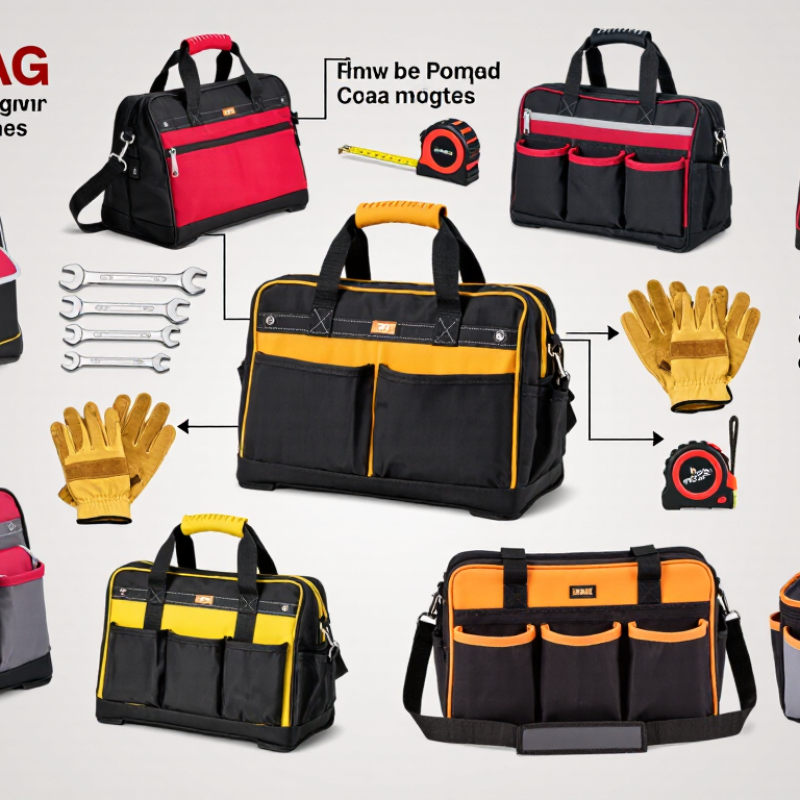
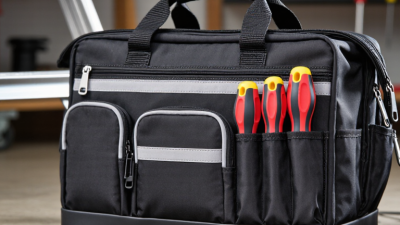
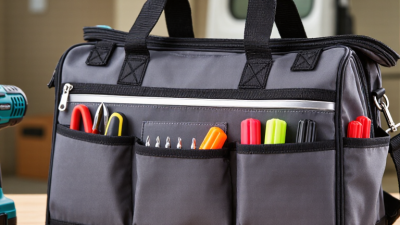
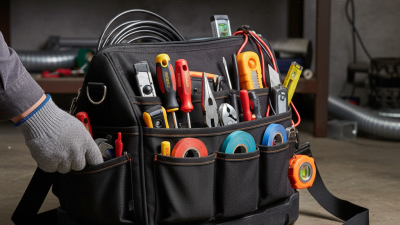
For global buyers, choosing a reliable China Tool Storage Bag manufacturer involves more than comparing factory prices. It requires practical knowledge of materials, stitching, capacity, packaging, and delivery performance. A professional supplier should understand how electricians, mechanics, contractors, and field technicians use bags in demanding environments. Heavy-duty polyester, reinforced handles, smooth zippers, and stable base panels can improve daily performance. Small details matter.
A capable manufacturer usually supports OEM and private-label projects with clear specifications. Buyers may request custom colors, logo printing, pocket layouts, foam protection, or moisture-resistant fabric. Samples should be checked by hand before mass production. Inspect the seams. Test the zippers. Load the bag. These simple steps reveal weaknesses that photographs often hide. Factory communication also matters, especially when drawings, measurements, and packaging instructions change during development.
Experienced suppliers can provide material information, production photographs, inspection records, and realistic lead times. However, no factory should be trusted only because its website looks polished. Independent audits, sample approval, and written quality standards create stronger evidence. Even reliable manufacturers may face fabric shortages, color differences, or unexpected production delays. This reality deserves attention. Buyers should ask how problems are reported and corrected.
China remains an important sourcing base for durable tool organization products. The right partner combines manufacturing experience, responsive service, consistent quality control, and honest communication. This guide explains how global buyers can evaluate a China Tool Storage Bag manufacturer with greater confidence and fewer costly surprises. 恒一
China Top Tool Storage Bag Manufacturer for Global Buyers
What Defines a Top Tool Storage Bag Manufacturer in China
A top tool storage bag manufacturer offers more than low pricing. It shows practical experience with hand tools, repair kits, and mobile work environments. Strong factories understand abrasion points, uneven weight, and repeated opening. They select durable fabrics, reinforced webbing, reliable zippers, and firm stitching. Sample bags should be tested with real tools, not only displayed in a showroom.
Professional production also requires stable quality control. Inspectors should check dimensions, stitching density, pocket strength, handle attachment, and surface defects. Clear production records help buyers trace materials and resolve problems. A reliable manufacturer communicates directly, confirms specifications, and reports delays honestly. Custom colors and layouts matter, but function should lead every decision.
No factory is perfect.
Tips: Request a sample before placing a large order. Fill it with actual tools and carry it for several days. Check balance, pocket access, handle comfort, and zipper movement. Ask for material details, inspection photos, packaging information, and production capacity. A factory may promise excellent durability, yet practical testing can reveal weak corners or poor organization. That gap deserves careful discussion, not a rushed purchase.
Professional tool storage bags are mobile workstations, not simple containers.
Common types include open-top totes, zippered cases, backpacks, and rolling bags.
Totes give fast access on busy sites. Zippered cases protect small tools from dust and impact.
Backpacks distribute weight across both shoulders. Rolling bags suit heavier equipment and longer travel.
Grand View Research estimated the global hand tools market at about USD 22.2 billion in 2022. Its report projects approximately 4.2% annual growth from 2023 to 2030. This wider market supports continued demand for organized tool transport. However, market reports use different product definitions, so exact figures should be reviewed carefully.
A professional bag should use durable fabric, reinforced stitching, corrosion-resistant zippers, and a water-resistant base. Padded handles matter. So does balance. Too many pockets can slow access, while too few allow tools to collide. A perfect layout rarely exists.
Tips: Match the bag to daily load, not its empty appearance. Check stitching around handles and shoulder straps. Place heavy tools near the base. Keep frequently used items in exterior pockets. Leave some space for gloves, measuring devices, and replacement parts.
A soft bag may look convenient, but poor weight distribution can quickly become uncomfortable. Personally, I would test the loaded bag for ten minutes before ordering large quantities.
China Top Tool Storage Bag Manufacturer for Global Buyers
A dependable tool storage bag begins with material selection, not decoration. Common options include 600D polyester, nylon, and coated fabrics. Each balances abrasion resistance, weight, water protection, and cost differently. Textile Exchange’s Materials Market Report 2024 estimates global fiber production reached 124 million tonnes in 2023. This scale makes traceable sourcing increasingly important. Our production checks fabric density, coating adhesion, color consistency, and odor before cutting. Small defects can become large failures.
Computerized cutting improves panel accuracy and reduces material waste. Skilled workers then reinforce handles, pocket openings, and load-bearing seams with bar-tack stitching. Zippers and hook-and-loop closures receive repeated opening tests. Samples also undergo seam-strength, abrasion, drop, and moisture-resistance checks. The ISO Survey 2022 reported more than 1.2 million ISO 9001 certificates worldwide. That figure shows how widely documented quality systems are used, but certification alone cannot replace physical inspection. It is an easy point to overlook.
Reliable factories keep batch records, approved samples, inspection photos, and corrective-action reports. A practical pre-shipment inspection should verify dimensions, empty weight, stitching density, logo placement, packaging, and carton strength. Some buyers may request testing under ASTM or ISO methods, depending on market requirements. Real production is never perfectly uniform. Thread tension can drift, and fabric shades may vary slightly between lots. Honest reporting, clear tolerances, and retained samples help global buyers make informed decisions.
Customization Options, Certifications, and Export Services
A reliable tool storage bag manufacturer should turn practical requirements into measurable specifications. Buyers can select fabric weight, lining, handle length, zipper type, colors, and compartment layouts. Foam inserts can protect drills, meters, and small hand tools during transport. Logo placement, woven labels, and packaging can also match regional sales needs. Samples should be checked before mass production. Small details matter.
Experienced production teams usually confirm dimensions, stitching density, load capacity, and abrasion performance before approval. Available compliance documents may include ISO 9001 records, material test reports, and declarations related to applicable market requirements. Certifications must match the product and destination. They should never be treated as decoration. Buyers should request current copies and verify the testing scope. This step is easy to overlook.
Export support can include sampling, production inspection, carton marking, commercial invoices, packing lists, and certificates of origin when required. Clear communication helps avoid incorrect labels or unexpected customs delays. However, no supplier can promise smooth clearance in every country. Rules change. We recommend confirming local import requirements before shipment. Our process still has room for improvement, especially when unusual materials or urgent delivery dates are involved. That honesty helps buyers plan with fewer surprises.
| Data Dimension | Standard Reference | Common Options | Buyer-Defined Requirements | Export and Quality Notes |
|---|---|---|---|---|
| Primary Fabric | Polyester, nylon, canvas, or a blended textile | 600D or 900D polyester; 500D or 1000D nylon; cotton canvas; recycled polyester | Fabric composition, denier, weave, coating, color, hand feel, and abrasion resistance | Fabric claims should be supported by supplier test reports or transaction-specific laboratory documentation. |
| Water-Resistance Construction | Water-repellent finish, PU coating, PVC coating, or laminated fabric | Water-repellent exterior; coated bottom panel; waterproof zipper cover; reinforced seams | Required water-resistance level, test method, coated-area coverage, and appearance after flexing | “Water-resistant” and “waterproof” are different performance claims and should not be used interchangeably. |
| Typical Bag Formats | Soft-sided storage and transport bags | Open-top tote, zippered tool bag, bucket bag, backpack-style tool bag, rolling tool bag, or organizer case | Overall dimensions, opening type, carrying method, pocket layout, and intended tool category | The final packed dimensions affect carton size, container loading, and freight cost. |
| Reference Size Range | Small to large professional-use formats | Approximately 25–50 cm long, 15–30 cm wide, and 15–35 cm high | Exact dimensions in millimetres, dimensional tolerance, and usable internal volume | Dimensions should be measured in the same condition stated in the technical specification, such as empty or fully expanded. |
| Internal Organization | Dedicated compartments for hand tools and accessories | Elastic loops, mesh pockets, slip pockets, zip pockets, removable dividers, and padded sections | Pocket quantity, pocket dimensions, tool retention, divider position, and accessibility | Internal layout should be validated with representative tools before mass production. |
| Base Protection | Reinforced fabric base or separate protective panel | Double-layer polyester, PVC-coated base, molded plastic panel, rubber feet, or abrasion-resistant fabric | Base material, wear resistance, cleanability, stiffness, and contact-point protection | A reinforced base can improve durability but may increase folded volume and shipping weight. |
| Handles and Carrying System | Webbing handles, shoulder strap, or backpack harness | Padded handles, adjustable shoulder strap, detachable strap, trolley sleeve, or reinforced grab points | Webbing width, handle drop, stitching pattern, padding thickness, and load test requirement | Load testing should reflect the bag’s intended use and should be recorded by sample or production lot. |
| Closure and Hardware | Zippers, hook-and-loop fasteners, buckles, snaps, or drawcords | Coil zipper, metal zipper, molded zipper, quick-release buckle, metal D-ring, or corrosion-resistant hardware | Hardware material, finish, color, puller design, closure direction, and cycle-life target | Hardware selection should consider corrosion exposure, temperature, repeated use, and destination-market expectations. |
| Brand Customization | Private-label decoration and packaging | Screen printing, heat transfer, embroidery, woven label, rubber patch, debossed patch, hangtag, and custom carton | Artwork format, logo size, placement, approved color references, label content, and packaging language | Vector artwork such as AI, EPS, or PDF is commonly preferred for accurate logo reproduction. |
| Color Management | Standard fabric and accessory color matching | Black, navy, grey, khaki, orange, blue, or custom color matching | Pantone reference, approved lab dip, color tolerance, and accessory color coordination | Fabric, webbing, zipper tape, and coated components may show slight shade variation between materials. |
| Common Product Tests | Performance checks selected according to the product design | Seam strength, tensile strength, abrasion resistance, colorfastness, zipper function, load testing, and dimensional inspection | Test method, sampling plan, acceptance criteria, testing laboratory, and report format | A product test report is not the same as a certification; the applicable requirement should be agreed before production. |
| Quality Inspection | Pre-production, in-process, and final inspection stages | Appearance inspection, measurement check, functional test, packaging verification, and quantity count | Inspection checklist, defect classification, AQL level, sampling quantity, and corrective-action procedure | AQL 2.5 is commonly used for general major-defect inspection, but the buyer should specify the required standard and limits. |
| Chemical and Material Compliance | Destination-market requirements apply | REACH-related substance control, CPSIA requirements for applicable United States products, or buyer-specific restricted-substance lists | Required declarations, restricted substances, component scope, test frequency, and laboratory accreditation | REACH and CPSIA obligations depend on the product, materials, claims, and destination market; compliance should be verified for each shipment program. |
| Optional Textile Certifications | Applicable only when the relevant materials and supply chain are certified | OEKO-TEX Standard 100 for tested textile components; Global Recycled Standard for qualifying recycled-content supply chains | Certificate scope, certificate validity, certified components, transaction documentation, and labeling permission | Certification marks must not be used unless the exact material, facility, and product scope are covered by valid documentation. |
| Sampling and Development | Pre-production sample approval | Material swatch, lab dip, first prototype, revised prototype, pre-production sample, and sealed reference sample | Sample quantity, revision schedule, approval authority, target date, and sample retention requirements | The approved sample should define dimensions, materials, colors, logo execution, workmanship, and packaging details. |
| Packaging Configuration | Retail, bulk, or e-commerce shipment packaging | Polybag, paper band, insert card, barcode label, master carton, recyclable packaging, or retail-ready packaging | Packaging material, carton dimensions, units per carton, barcode format, warning text, and drop-test requirements | Packaging must comply with the buyer’s labeling and environmental requirements in the destination market. |
| Shipping Documents | Documents depend on the agreed trade term and destination | Commercial invoice, packing list, bill of lading or air waybill, and certificate of origin when required | Consignee details, HS classification, country-of-origin wording, carton marks, and document submission deadline | HS classification for textile tool bags can vary by construction and material; the importer or customs broker should confirm the correct code. |
| Trade Terms | Incoterms® 2020 | EXW, FOB, FCA, CIF, CPT, DAP, or other mutually agreed terms | Named place or port, freight responsibility, insurance responsibility, customs clearance, and delivery scope | The selected Incoterm should match the buyer’s import capability and clearly define cost and risk transfer points. |
| Freight Modes | Mode selected by order size, urgency, and destination | Courier, air freight, rail freight, or ocean freight; full-container or consolidated shipment | Delivery address, required arrival date, carton data, cargo value, and preferred logistics provider | Freight quotations require confirmed packed dimensions, gross weight, carton quantity, origin, destination, and trade term. |
| Production Planning | Lead time varies by customization level and order quantity | Existing material and standard color program; custom fabric, hardware, artwork, packaging, and special testing | Target quantity, launch date, purchase-order date, approval milestones, and replenishment schedule | A confirmed production schedule should be issued only after specifications, sample approval, materials, and packaging are finalized. |

China Top Tool Storage Bag Manufacturer for Global Buyers
How Global Buyers Evaluate and Select a Reliable Supplier
Global buyers evaluating a Chinese tool storage bag manufacturer look beyond low quotations. A reliable supplier proves capability through samples, records, and clear communication. Ask for material specifications, stitching details, zipper grades, and load-test results. Small details matter.
Request samples matching actual tools, not decorative showroom pieces. Check handle reinforcement, pocket depth, seam alignment, odor, and water resistance. A capable factory explains its fabric choice and accepts reasonable revisions. Review production capacity, quality checkpoints, inspection photos, and corrective-action records. Confirm whether lead times include sampling, production, and final inspection. Vague answers are warning signs.
Trust also depends on traceable business practices. Verify the factory address, export experience, worker safety measures, and material documentation. A video audit can help, but it cannot replace independent inspection. Compare payment terms, packaging protection, spare capacity, and response speed during problems. No supplier is flawless. Even a strong factory may miss a loose thread or misread a measurement. What matters is honest disclosure and prompt correction. Record every requirement in an approved sample and purchase specification. This reduces surprises, although it does not remove them.