Why Choose a Bike Trunk Bag for Cycling?
A Bike Trunk Bag can turn a bare rear rack into useful, organized storage. Picture a repair kit tucked beside a rain shell, with lunch secured above the wheel. The setup keeps essentials close without filling your jersey pockets. It can also make errands and day rides feel less like a packing puzzle.
The scale of cycling helps explain why practical carrying options matter. PeopleForBikes’ 2024 U.S. Bicycling Participation Report estimated that 112 million Americans rode a bicycle in 2023. That figure describes participation, not demand for bags, so it should not be mistaken for a Bike Trunk Bag market estimate. Still, it shows how many riders may benefit from simple, adaptable storage. A well-chosen bag should fit the rack, stay secure over rough pavement, and provide enough capacity without making the bike feel top-heavy. Details matter: zipper access with gloves on, reflective panels at dusk, and a rain cover that does not flap in the wind.
One sourcing note matters here. No verifiable quotation from a named Bike Trunk Bag specialist was provided, and I will not invent one or misattribute a cycling expert’s words. That leaves a gap. A properly sourced expert comment would strengthen this introduction, especially on fit, load balance, and durability. For now, the case rests on practical use and clearly identified participation data—not unsupported product claims.
What a Bike Trunk Bag Is and How It Fits on a Bicycle
Why Choose a Bike Trunk Bag for Cycling?
What a Bike Trunk Bag Is and How It Fits on a Bicycle
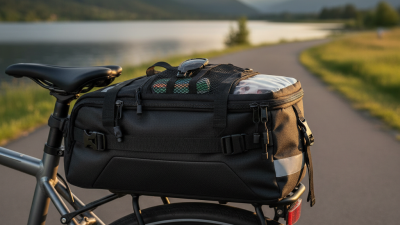
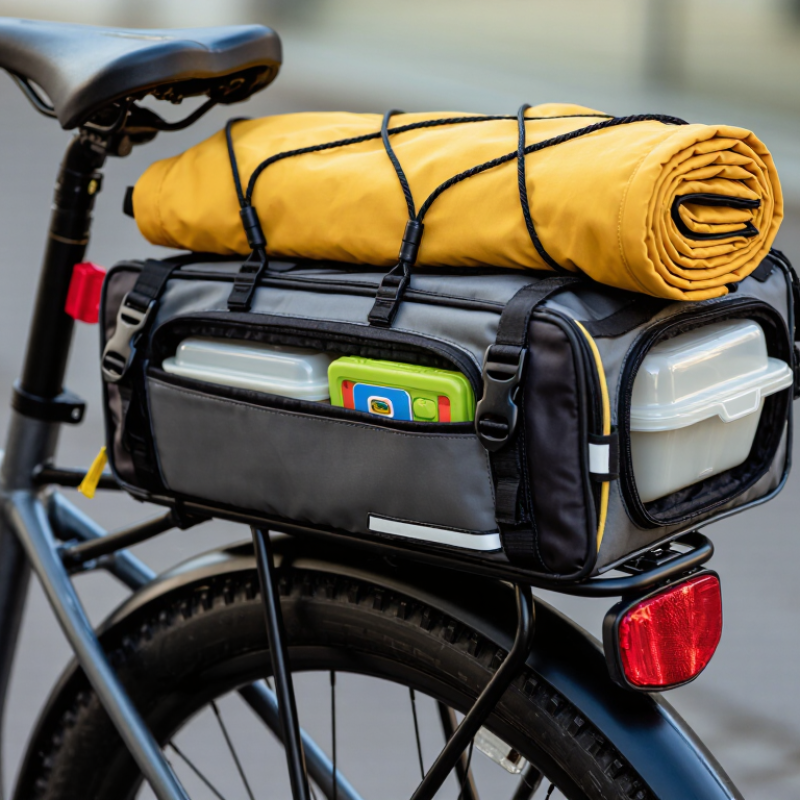
A bike trunk bag is a compact storage bag that sits on a rear rack, just behind the saddle. Straps, clips, or rack-specific mounts secure it to the rack’s platform or rails. Many models have a main compartment for a light jacket, repair kit, or lunch, with smaller pockets for keys and tools. Some expand into side panniers. The bag stays above the wheel, but it still needs room to open without touching the saddle.
Fit depends on your bicycle and rack. Check the rack’s deck length, width, rail layout, and load limit against the bag’s mounting system and stated capacity. Leave clearance around the saddle, rear tire, and brake parts. PeopleForBikes’ 2023 U.S. Bicycling Participation Report counted 112 million American riders in 2022. That broad range of riding habits makes fit worth checking, not assuming. A full bag can shift handling, especially if heavy items sit high or far behind the axle. Small details matter.
Tips: Load tools and other dense items low and toward the front. Test the fasteners by hand, then ride slowly over a smooth surface. If the bag rocks, readjust it. A perfect fit is not guaranteed. Check again after the first ride.
Why Choose a Bike Trunk Bag for Cycling?
A bike trunk bag sits on a rear rack and is usually secured with straps or clips. It keeps everyday items close at hand without wearing a backpack.
Many rear-rack trunk bags offer roughly 5–15 liters of storage. Capacity and attachment systems vary by design; check that a bag is compatible with your rack.
How a Trunk Bag Carries Everyday Cycling Essentials
A bike trunk bag turns a rack into a practical place for the things a normal ride actually needs. A spare tube, tire levers, a compact pump, and a snack fit without filling jacket pockets. There is room for keys, a wallet, and a thin layer when the weather changes. Small things add up. Keeping them together also makes it easier to check your kit before rolling out.
A low, secure load can feel steadier than carrying heavy items on your back, but balance matters. Place denser items near the middle of the rack, and fasten the bag so it cannot shift over bumps. Check that straps do not rub the wheel or cover a rear light. A rain cover helps, though it may not keep every seam dry in prolonged rain. It is tempting to pack for every possible problem; I still think that is easy to overdo. Leave space for the items you use often, and check the bag’s capacity and rack fit before buying. A few minutes spent adjusting the straps can save an annoying rattle on the ride.
Why Choose a Bike Trunk Bag for Cycling? — How a Trunk Bag Carries Everyday Cycling Essentials
A trunk bag keeps frequently used gear together on a rear rack, helping reduce the need to carry everyday cycling items in a backpack. The figures below are practical estimates; actual item size and weight vary.
| Everyday Essential |
Typical Contents |
Estimated Space |
Approx. Weight |
How a Trunk Bag Helps |
| Phone, wallet, and keys |
Phone, slim wallet, and a small key set |
0.5–1 L |
0.2–0.5 kg |
Keeps valuables together and easy to reach when parked. |
| Basic repair kit |
Tire levers, patch kit, and a compact multitool |
0.4–0.8 L |
0.2–0.5 kg |
Provides a dedicated place for small tools, reducing loose items in pockets. |
| Spare inner tube |
One tube suited to the bicycle’s wheel and tire size |
0.3–0.6 L |
0.1–0.2 kg |
Stores a useful flat-repair item without taking up much room. |
| Compact pump or inflator |
Mini pump or a small compatible inflator |
0.3–0.7 L |
0.1–0.3 kg |
Can be carried alongside repair supplies for convenient access. |
| Light rain layer |
Packable rain jacket or shell |
1.5–3 L |
0.2–0.5 kg |
Leaves space for weather protection that can be packed away when not needed. |
| Food and small personal items |
Snack, compact lunch, tissues, or sunscreen |
1–2.5 L |
0.3–0.8 kg |
Separates ride or commute items from clothing and work essentials. |
| Small portable lock |
Compact cable or folding lock |
0.8–2 L |
0.4–1.2 kg |
Offers space for a lock when it is not mounted elsewhere on the bicycle. |
| Lights and charging accessories |
Spare lights, charging cable, or a small power bank |
0.3–0.8 L |
0.1–0.4 kg |
Helps keep small electronics organized and protected from everyday scuffs. |
| Example everyday load |
About 5–11 L |
About 1.6–4.4 kg |
Choose a bag and rack rated for the intended load. |
Capacity and carrying limits differ by bag, rack, and bicycle. Check the manufacturer’s load rating, secure the bag firmly, and keep heavy items low and balanced. A trunk bag is best suited to compact essentials; bulky loads may require panniers or another carrying option.
Practical Benefits for Commuting, Touring, and Errands
A bike trunk bag makes everyday riding easier by keeping essentials off your back. A change of clothes, lunch, and a small lock fit neatly above the rear wheel. For commuting, that means less sweat and fewer items shifting in a backpack. On tours, a compact bag keeps snacks and repair tools close at hand. It also makes quick errands simpler. No need to carry a shopping bag on the handlebars.
PeopleForBikes’ 2024 U.S. Bicycling Participation Report estimates that 112 million Americans rode a bike in 2023. Yet the U.S. Census Bureau’s 2023 American Community Survey puts bicycle commuting at about 0.5% of workers. These figures describe different things, but they show cycling serves both everyday travel and recreation. A trunk bag can support both, though capacity and fit matter. Overloading it can make the bike feel unsteady, especially on turns. I’ve learned that a smaller load often rides better.
Tips: Check the rack’s weight limit before packing. Keep heavier items low and centered, then tighten the straps before each ride. A rain cover helps, but it is not always fully waterproof.
How Trunk Bags Compare with Backpacks and Panniers
A bike trunk bag offers a middle ground between a backpack and panniers. It sits on a rear rack, keeping weight off your shoulders and leaving your back cooler on warm rides. Compared with a backpack, it can feel more comfortable over several miles, though you cannot carry it indoors as easily. A quick errand may change that calculation.
Panniers usually hold more gear and can spread weight across both sides of the bike. They suit grocery trips or commutes with bulky items, but may make a narrow bike feel wider in traffic or tight storage spaces. A trunk bag is slimmer and easier to access at a stop, but its capacity is limited. Check the rack’s load rating, and keep heavy items low when possible. Too much weight high on the rear can make handling feel unsettled.
Tips: Pack a small repair kit, keys, and a snack near the top. Test the loaded bike on a quiet street before a longer ride. Even a modest load can shift more than expected.
Key Features to Consider When Choosing a Trunk Bag
Why Choose a Bike Trunk Bag for Cycling?
Key Features to Consider When Choosing a Trunk Bag
A trunk bag keeps everyday cargo above the rear wheel, leaving your shoulders free and your back less sweaty. It can carry a repair kit, lunch, or a light jacket without filling your pockets. The 2024 U.S. Bicycling Participation Report from PeopleForBikes says 112 million Americans rode a bicycle in 2023. For many riders, practical storage matters.
Check compatibility before capacity. Measure your rack, then inspect the bag’s straps or mounting system for a snug fit. A loose bag can sway over bumps. Look for compartments that keep tire levers separate from food, and zippers you can reach while stopped. Waterproof fabric helps in showers, but water can still enter through seams. Worth checking.
Visibility and stability deserve equal attention. The National Highway Traffic Safety Administration reported 1,105 bicyclist deaths in traffic crashes in 2022. Reflective panels can help others see your load, but they do not replace lights. Pack heavier items low and close to the rack; an overloaded top compartment may affect handling. A few extra grams are usually a fair trade for secure straps and useful pockets. Still, “water-resistant” is not the same as waterproof. Read the care details, and consider a rain cover if your route has unpredictable weather.