
China Top Makeup Organizer Bag Manufacturers Suppliers?
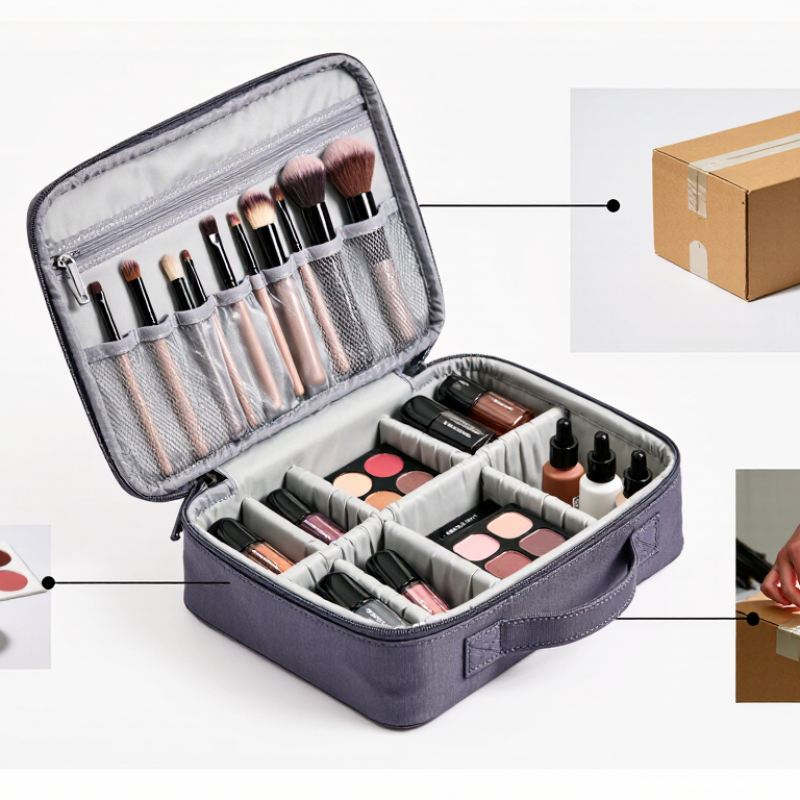
Choosing reliable China makeup organizer bag manufacturers and suppliers requires more than comparing prices. A strong supplier should understand cosmetics storage, travel use, and daily handling. The right Makeup Organizer Bag should protect brushes, bottles, palettes, and small accessories without becoming bulky. Buyers should examine fabric quality, stitching density, zipper performance, lining, and compartment design. A sample often reveals details that product photos hide. Weak seams show quickly.
Experienced manufacturers usually offer materials such as polyester, nylon, canvas, or recycled fabrics. They can also provide custom colors, logos, sizes, and internal layouts. However, customization may affect minimum order quantities, production time, and final cost. Clear communication matters. Request material specifications, sample approval, packaging details, and inspection procedures before placing a larger order. Independent quality checks can add confidence, especially for international buyers.
The best suppliers combine production experience with practical design knowledge. They should explain how a bag performs in factories, warehouses, luggage, and retail displays. Ask about export experience and relevant product documentation. Do not rely on claims alone. Verify business records, factory capacity, test samples, and customer feedback where possible. No supplier is perfect. That assumption deserves review. Even an attractive quotation may hide inconsistent stitching or delayed delivery. A careful sourcing process reduces these risks and supports a more dependable partnership. This guide examines leading China manufacturers and suppliers, focusing on quality, customization, communication, and long-term value. Practical evidence matters most.
What Defines a Top Makeup Organizer Bag Manufacturer in China?
A top makeup organizer bag manufacturer in China combines verified production control with practical product experience. McKinsey’s 2023 beauty report expects the global beauty market to approach 580 billion US dollars by 2027. That growth increases pressure on suppliers to deliver consistent quality, not only attractive samples. A reliable factory should show material records, sewing specifications, inspection procedures, and corrective-action reports. Experience appears in small details: smooth zippers, reinforced handles, clean edge binding, and pockets that hold brushes without bending them.
Design discipline matters.
Grand View Research identifies rising demand for cosmetic bags through online retail and travel use. A capable manufacturer should therefore test abrasion resistance, zipper cycles, colorfastness, and load capacity. ISO 9001-based procedures can improve traceability, but certification alone proves little. Buyers should inspect batch records and compare pre-production samples with finished goods. Packaging safety and chemical compliance should also be documented for the destination market. Regulations differ, so vague promises are not enough.
Top suppliers communicate clearly about minimum order quantities, lead times, tooling, and material substitutions. They offer measurable inspection standards, such as AQL sampling, rather than saying “excellent quality.” Still, no factory is flawless. Stitch density may vary, and a late material change can affect structure. Honest suppliers disclose these risks early and propose tests. That is more trustworthy than polished presentations. A careful audit, retained sample, and written approval process often separate a dependable manufacturer from a merely low-cost seller.
China Top Makeup Organizer Bag Manufacturers Suppliers? - What Defines a Top Makeup Organizer Bag Manufacturer in China?
| Evaluation Dimension | Typical Industry Benchmark | What a Top Manufacturer Usually Provides | Buyer Verification Method |
|---|---|---|---|
| Product Categories | Travel cosmetic bags, train cases, hanging organizers, toiletry bags, and storage pouches | Multiple constructions, including soft bags, semi-rigid cases, compartment organizers, and custom-shaped designs | Request a current product catalog and samples from different construction types |
| Common Materials | Polyester, nylon, PU, PVC, cotton canvas, mesh, EVA, metal, and plastic accessories | Material options matched to durability, water resistance, appearance, cost, and intended use | Check material specifications, thickness, composition, color consistency, and laboratory or supplier test records |
| Customization Capability | Logo printing, embroidery, woven labels, custom colors, dimensions, pockets, handles, and packaging | Design assistance, technical drawings, material matching, sampling, and production based on approved specifications | Ask for a pre-production sample and a written specification sheet before bulk approval |
| Minimum Order Quantity | Often about 300–1,000 pieces for standard or lightly customized designs; fully custom orders may require more | Clear MOQ rules by material, color, logo method, and product construction, with lower quantities available for samples or stock items | Obtain a formal quotation showing MOQ by color, design, and customization option |
| Sampling Lead Time | Approximately 7–15 working days for a standard sample; complex samples may take longer | Defined sample schedule, revision process, and approval documentation | Compare the promised schedule with actual sample delivery and revision response time |
| Bulk Production Lead Time | Commonly about 30–60 days after sample approval and deposit, depending on order complexity | Capacity planning, production milestones, material reservations, and proactive delay communication | Request a production schedule and confirm the lead time in the purchase contract |
| Quality Control | Incoming material inspection, in-process checks, finished-goods inspection, and packaging verification | Documented inspection standards covering dimensions, stitching, zippers, printing, color, cleanliness, and packaging | Request inspection records, defect criteria, corrective-action reports, and pre-shipment inspection rights |
| Functional Durability | Performance depends on fabric strength, seam construction, zipper quality, lining, and load distribution | Reinforced stress points, smooth-running zippers, stable compartments, washable or wipe-clean linings, and consistent construction | Conduct sample tests for zipper cycling, handle strength, seam quality, colorfastness, and compartment fit |
| Compliance Support | Compliance requirements vary by destination, materials, packaging, and intended market | Material declarations, restricted-substance documentation, test coordination, and export paperwork support when required | Specify destination-market requirements and verify documents through an independent laboratory when necessary |
| Packaging Options | Polybags, paper sleeves, cartons, inserts, hangtags, and customized retail packaging | Packaging engineering that protects the bag from compression, moisture, abrasion, and transit damage | Approve packaging artwork, carton dimensions, carton marks, and packing method before production |
| Export Experience | Export arrangements may include EXW, FOB, CIF, or other agreed trade terms | Accurate commercial invoices, packing lists, shipping coordination, and clear communication about trade terms | Confirm the exporter of record, payment terms, shipping documents, and responsibility for customs clearance |
| Production Transparency | Factory information, production photographs, sample records, and inspection updates should be available upon request | Traceable order records, consistent point-of-contact, documented approvals, and timely production updates | Use a factory audit, video inspection, third-party inspection, or verified production report |
| Commercial Value | Total cost includes product price, tooling, sampling, printing, packaging, freight, duties, and quality-control expenses | Transparent quotations with stable specifications, realistic delivery commitments, and cost-saving recommendations that do not compromise function | Compare like-for-like quotations using the same materials, dimensions, accessories, packaging, trade terms, and inspection requirements |
Note: Lead times, MOQs, testing requirements, and costs vary according to materials, customization level, order quantity, destination market, and seasonal production capacity.
Related Posts
-

Top Makeup Organizer Bags of 2025 for Easy Storage and Travel
-

Exploring Unique Designs of Musical Carrying Bags: A Look at Creative Examples
-
Emerging Innovations in Best Durable Tool Bag Designs for 2025
-
How to Choose the Best Bicycle Frame Bag
-
7 Essential Tips for Choosing the Perfect Medical Carrying Case
-
Emerging Innovations in Best Medical Equipment Bags Shaping the Future of Healthcare by 2025