How to Choose the Best Motorcycle Storage Bag?

Choosing the best Motorcycle Storage Bag begins with understanding how and where you ride. A commuter needs quick access, weather protection, and stable attachment during daily traffic. A touring rider may prioritize capacity, durability, and organized compartments. Before comparing brands, measure the motorcycle’s available space. Check the seat, rear rack, frame, and exhaust clearance carefully. A bag that looks spacious online may interfere with indicators, suspension movement, or passenger comfort.

Material quality matters in real conditions. Look for abrasion-resistant fabric, reinforced stitching, reliable zippers, and sealed or covered seams. Water resistance is useful, but waterproof claims deserve closer inspection. Read the manufacturer’s specifications and examine customer feedback from riders in similar climates. A rain cover can protect the bag during storms, although it may flap loudly at highway speed. Small details matter. Reflective panels improve visibility at night, while padded walls can protect tools and personal items.

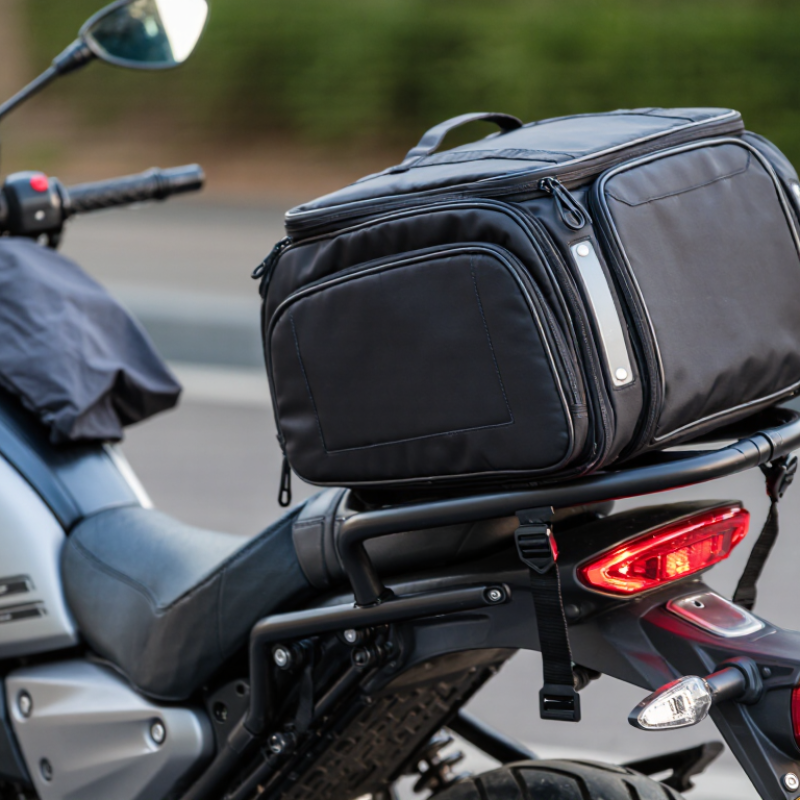
Attachment systems also deserve practical testing. Straps should remain tight without scratching painted surfaces. Quick-release buckles save time, but weak hardware can become frustrating. No bag is perfect. Extra capacity may increase wind resistance, and heavy loading can affect motorcycle balance. Pack only what the bike can safely carry, then test the bag on a short ride before traveling far. This guide will compare size, construction, security, comfort, and value. It will also question popular features instead of accepting marketing language too easily. The best choice is not always the largest or most expensive option. It is the one that fits your motorcycle, riding habits, and changing weather conditions.
How to Choose the Best Motorcycle Storage Bag?

Define Storage Needs Using Motorcycle Dimensions and Load Capacity

How to Choose the Best Motorcycle Storage Bag?

Define Storage Needs Using Motorcycle Dimensions and Load Capacity

Before choosing a motorcycle storage bag, measure the bike instead of guessing its size. Record the handlebar width, mirror height, seat length, and wheelbase. Include added equipment, such as side cases, a rear rack, or protective bars. A bag that fits the body may still press against mirrors or interfere with steering.

Leave practical clearance around moving and heated parts. I usually allow several centimeters around the exhaust, chain area, and brake components. Check the motorcycle’s user manual for safe loading limits. The bag’s maximum capacity should exceed your planned load, not merely match it. For example, tools, rain gear, gloves, and a lock can become surprisingly heavy.

Weight distribution matters too. Keep dense items low and close to the motorcycle’s center. Uneven loading can make the bike feel unstable during slow turns. I once packed a compact bag with too many metal tools, and the straps shifted after a short ride. That mistake changed my fitting routine. Now I test the bag while parked, turn the handlebars fully, and inspect every contact point.

Do not trust appearance alone. A roomy bag may sag, block lights, or touch hot surfaces. Check strap length, attachment points, material strength, and weather resistance. Water-resistant fabric is useful, but exposed seams and zippers still need attention. Real conditions are less forgiving than product photos.

Compare 300D–1680D Fabrics by Abrasion and Tear Resistance

How to Choose the Best Motorcycle Storage Bag?

A motorcycle storage bag must resist daily rubbing, sharp corners, and sudden weather changes. Fabric denier helps, but it does not tell the entire story. A 300D polyester bag is light and easy to carry. However, it may show scuffs sooner against footpegs or rough garage walls. It suits sheltered storage and occasional transport.

A 600D fabric offers a better balance between weight and abrasion resistance. For frequent outdoor use, 900D or 1200D materials provide stronger protection around seams and contact points. Their tighter weave usually handles repeated friction better. A 1680D fabric feels noticeably tougher, especially near buckles, handles, and the bag base. Still, higher denier can increase weight and stiffness. It is not automatically the best choice.

Tips: Check the fabric coating, stitching, and seam reinforcement. Pull gently near the handle. Weak stitching often reveals itself quickly. Examine the base for double layers or added panels. Tear resistance also depends on weave quality, thread strength, and construction. During practical testing, a thick fabric can resist abrasion but fail at a poorly sewn corner. That detail is easy to miss. Think about your real conditions, not only the largest denier number. A lighter 600D bag may serve better than an awkward 1680D model if you carry it often.

Check IP Ratings Under IEC 60529 for Rain and Dust Protection

How to Choose the Best Motorcycle Storage Bag?

Check IP Ratings Under IEC 60529 for Rain and Dust Protection

A motorcycle storage bag faces road grit, puddles, and sudden rain. The IP code offers a useful technical checkpoint. Under IEC 60529:2013, the first digit measures solid-particle protection from 0 to 6. The second measures water resistance from 0 to 9K. An IP65 bag is dust-tight and resists water jets. An IP66 rating handles stronger jets, while IP67 allows temporary immersion. These ratings are not interchangeable.

Look closely.

A higher water digit does not always mean better riding protection. IP67 testing may not cover high-pressure spray, so IP66 can matter near wheels and muddy roads. Check whether the rating covers the complete bag, including seams, closures, and ventilation openings. A certificate or test report is more reliable than a printed claim. The U.S. National Centers for Environmental Information recorded 28 billion-dollar weather disasters in 2023, showing how costly severe weather exposure can become. That figure is not a motorcycle-specific measurement, but it supports planning for harsher conditions. I once trusted a strong rating and ignored the zipper design; moisture still reached the fabric inside. My mistake.

Choose a bag with sealed seams, a covered closure, and reinforced contact panels. Dust protection also matters after dry-road riding.

IEC 60529 describes controlled laboratory tests, not every real roadside situation. Inspect the bag after repeated folding. Ratings can fade in practical value when materials age, edges deform, or closure teeth collect grit.

Evaluate UV Resistance, Heat Tolerance, and Temperature Ratings

How to Choose the Best Motorcycle Storage Bag?

Sunlight can quietly weaken a motorcycle storage bag. The WHO, WMO, UNEP, and ICNIRP Global Solar UV Index classifies readings of 8–10 as very high. Readings above 11 are extreme. A parked motorcycle may face several hours of direct exposure. Look for tested UV resistance, not vague claims like “sun-proof.” ISO 4892-3 and ASTM G154 provide recognized methods for accelerated UV and moisture testing. These results help, but they do not perfectly copy real parking conditions.

Heat tolerance matters just as much. Dark fabric can become painfully hot under summer sunlight. A useful specification should state continuous and short-term temperature ratings. For example, a bag rated to 70°C may handle intense surface heat better than one with no published limit. Check whether the rating applies to the fabric, coating, zipper, and transparent panels. One weak component can ruin the whole cover. It happens.

Cold performance deserves equal attention. Brittle coatings may crack when folded below freezing. Ask for test data based on ISO 4892 or relevant low-temperature flexibility procedures. Inspect a sample after heating, cooling, and repeated folding. I once trusted a thick-looking cover that felt strong in the shop, yet its coating became sticky after summer exposure. Appearance can mislead.

Choose verified test evidence, clear temperature ranges, and replacement-friendly hardware. Your storage location matters too. Shade, airflow, and trapped moisture can change performance more than a product label suggests.

How to Choose the Best Motorcycle Storage Bag?

Evaluate UV resistance, heat tolerance, and temperature ratings before choosing outdoor motorcycle storage protection.

The chart compares typical material guidance rather than a specific product certification. Solution-dyed acrylic generally provides the strongest UV resistance, while coated polyester offers a balanced combination of flexibility, weather protection, and temperature performance. Always check the manufacturer’s stated operating range, coating construction, seam quality, and ventilation requirements.

Material Typical Temperature Range UV Resistance Selection Guidance
Solution-dyed acrylic −30°C to 90°C Excellent Best for prolonged outdoor sun exposure.
PU-coated polyester −40°C to 80°C Good A practical balance of weight, water resistance, and flexibility.
PVC-coated polyester −20°C to 70°C Good Durable and water-resistant, but may become stiff in cold weather.
Polyethylene film or tarpaulin −60°C to 80°C Moderate Lightweight and economical, but UV stabilizers are important for long-term use.

Verify Strap Strength, Lock Compatibility, and Installation Safety

How to Choose the Best Motorcycle Storage Bag?

A secure motorcycle storage bag starts with its straps, not its capacity. Check stitching, buckle quality, and the strap’s working load limit. The Federal Motor Carrier Safety Administration recommends tie-down strength equal to at least half the cargo weight. This is a useful safety benchmark, although motorcycle bags face different forces.

NHTSA’s 2022 Traffic Safety Facts reported 6,084 motorcycle rider deaths in the United States. Vibration and sudden braking make weak attachment points risky.

Pull each strap firmly. Look for movement around the seat, rack, or frame.

Lock compatibility needs equal attention. Measure the bag’s lock loop before buying a disc lock or cable lock. The metal loop should resist twisting and should not block the wheel or brake components. Avoid placing a lock where it can strike the suspension.

Installation safety is more than tightening straps. Keep all loose webbing away from the chain, exhaust, and rear wheel. A bag that shifts two centimeters can become a serious distraction. I sometimes find that “universal” fittings are not truly universal. Recheck them after a short ride.

Tips:

Load heavy items low and centered. Use two independent straps when possible. Test the bag empty first. Inspect frayed stitching immediately. Do not cover reflectors or lights. Weatherproof fabric helps, but sealed seams can still leak. Take photos before and after installation. That small record can reveal gradual strap movement that a quick glance misses.