How to Choose the Best Heavy Duty Tool Bag?

Choosing the right Heavy Duty Tool Bag is not just about finding the largest bag or the toughest-looking fabric. The best option should match the tools you carry, the places you work, and how often you move between jobs. A bag that feels sturdy in a store may become awkward when loaded with a drill, sockets, and hand tools. Weight matters.

Start with materials and construction. Reinforced stitching, durable zippers, a firm base, and abrasion-resistant fabric can help a bag handle regular use. Look closely at the seams and handles, not only the product photos. A weak handle can make a well-organized bag frustrating to carry. Still, no bag is perfect.

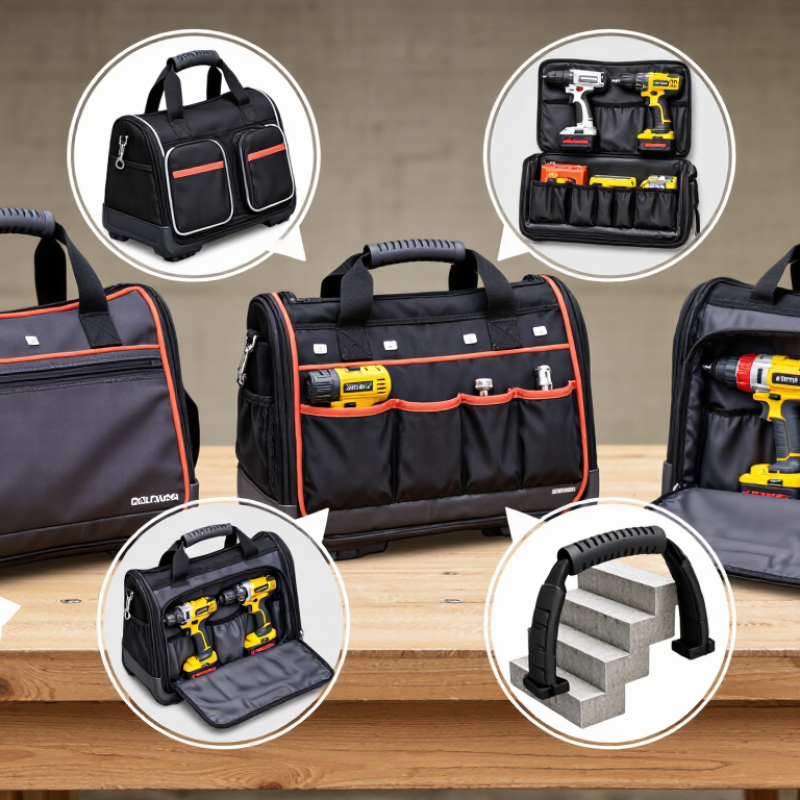
Organization is just as important as durability. Pockets should keep small items visible and prevent tools from shifting into one heavy pile. Check whether the compartments fit your actual equipment, including bulky power tools and their batteries. If you work outdoors, consider water-resistant materials, but do not assume they make a bag waterproof. Comfort also deserves attention: padded handles or a shoulder strap may help during short trips, while wheels can suit heavier loads on smooth surfaces. They may be less useful on stairs or rough ground.

Before buying, compare capacity, empty weight, warranty terms, and cleaning requirements. Reviews can reveal recurring issues, but make sure they describe similar work conditions. A compact bag may be easier to carry, yet leave little room for future tools. That trade-off is easy to miss. The goal is a dependable fit for your routine, not a bag that promises to do everything.
How to Choose the Best Heavy Duty Tool Bag?

Identify Your Tools, Work Environment, and Carrying Needs

Before choosing a heavy duty tool bag, list the tools you carry on a typical day. Include bulky items, not just hand tools: a drill, spare batteries, a tape measure, and the small fittings that tend to disappear. Check each tool’s dimensions and weight. A bag that fits everything on paper may still feel awkward when packed. Leave room for your hands to reach inside.

Think about where the bag travels. A workshop floor is different from a damp jobsite or a crowded vehicle. Reinforced stitching and a firm base can help when the bag is loaded and set down often. Water-resistant fabric may protect tools from splashes, but it is not necessarily waterproof. Check the seams and zipper area, too.

Then consider how you carry it. Shoulder straps can spread weight, while handles may work better for short trips. Try lifting a similar load before committing; ten minutes of carrying can reveal pressure that an empty bag hides. It’s easy to overpack. Be honest about what you use every week, and reconsider the rest. Pockets should match your routine: deep compartments for larger tools, and secure small pockets for bits, fasteners, or a pencil. If you work from a vehicle, measure the storage space before buying. A bag that won’t fit under the seat is no help.

Compare Materials, Stitching, and Overall Construction

A heavy-duty tool bag should survive abrasion, sharp tool edges, and repeated lifting. Start with the fabric, but do not judge it by thickness alone. Check the weave, coating, and reinforced base; a stiff coating can crack after repeated folding. Textile Exchange’s Materials Market Report 2024 estimates polyester represented 57% of global fiber production in 2023. That figure reflects widespread use, not proof that any polyester bag will last. Denier is an imperfect shortcut. ASTM D3884 describes a method for assessing fabric abrasion resistance, while ASTM D5034 measures breaking strength. These test methods offer useful comparison points when manufacturers provide results.

Small details matter. Inspect stress points where handles meet the body. Tight, even stitching and bar tacks can help spread lifting forces; loose threads or skipped stitches deserve a closer look. Check the seam allowance, too. A narrow seam may pull apart under a heavy, uneven load. The base should resist sagging, and its corners should be reinforced, where tools often press hardest. Open and close the zippers several times, then inspect their attachment seams. I would not assume that more stitches always mean stronger construction; thread quality, stitch spacing, and fabric layers matter as well. That is easy to overlook. A bag can feel tough in a shop and still fail at its seams.

Choose the Right Capacity, Compartments, and Tool Organization

How to Choose the Best Heavy Duty Tool Bag?
Choose the Right Capacity, Compartments, and Tool Organization

Start with the tools you carry on a typical workday, not every tool you own. Lay them out and group them by size and task. A bag that is too small strains its seams, while excess room lets tools shift during a walk. Check the stated capacity, but compare it with your actual load. A tape measure, drill, and several hand tools need more space than their outline suggests.

Compartments should keep essentials visible and separate. Deep pockets can hold a hammer or pliers, while narrow sleeves help prevent screwdrivers from sinking to the bottom. Look for a wide opening that stays accessible when the bag is set down. Reinforced handles and a firm base matter when the load is heavy. Still, more pockets are not always better; tiny compartments can slow you down if you forget where things belong.

Tips: Pack frequently used tools near the opening. Keep sharp edges away from fabric walls. Test the bag with your real load before relying on it. Notice what you reach for most, then adjust the layout; organization often takes a few imperfect tries.

How to Choose the Best Heavy Duty Tool Bag

Plan capacity and compartments around the tools you carry most often. This suggested allocation is a practical packing guide, not a survey of tool bags.

How to use this guide: Give frequently used tools the largest share of accessible storage. Keep power tools secure, group hand tools by task, and reserve smaller compartments for fasteners, measuring tools, and personal protective equipment.

Evaluate Handles, Straps, and Ease of Access

How to Choose the Best Heavy Duty Tool Bag?
Evaluate Handles, Straps, and Ease of Access

A heavy-duty bag is only useful if you can carry it comfortably and reach tools without wrestling with the opening. Check that handles are stitched through reinforced panels, not just thin outer fabric. Lift the empty bag, then test it with your usual tools. Does it tilt? Do the handles bite into your fingers? Small details matter on a long walk across a jobsite.

NIOSH’s 1994 Applications Manual for the Revised NIOSH Lifting Equation sets a 51-pound recommended weight limit under ideal two-handed lifting conditions. That figure is not a safe carrying limit for tool bags; reach, posture, and repetition change the risk. Treat it as a reminder to avoid overloading. A padded shoulder strap can spread pressure, but it should sit securely and keep the bag close to your body. Wide, balanced openings also help you spot a socket or tape measure quickly. Still, a clever pocket layout cannot fix poor balance.

Tips: Load heavier tools near the bottom and close to your side. Try the strap over the clothing you wear at work. Check access while standing naturally, not while twisting. I still find that one awkward pocket can slow a job more than expected. Test the bag with real tools before deciding.

How to Choose the Best Heavy Duty Tool Bag? - Evaluate Handles, Straps, and Ease of Access
Evaluation Criterion Weight What to Inspect Practical Check Favorable Signs Score (1–5)
Handle construction 15% Grip comfort, handle material, and how the handle joins the bag. Lift the bag with a representative load, staying within its stated capacity. Check for uncomfortable pressure or shifting. Comfortable grip; secure, reinforced attachment points; no visible loosening. _____
Handle balance and carry control 10% Whether the bag hangs level and remains manageable when carried by its handles. Carry it a short distance with tools arranged as you would normally pack them. Load stays reasonably balanced; bag does not twist excessively or strike your legs. _____
Shoulder strap comfort 15% Strap width, padding, adjustability, and contact with the shoulder. Adjust the strap and carry a representative load briefly over the clothing you usually wear. Strap sits securely, adjusts easily, and spreads pressure without slipping. _____
Strap attachment and hardware 15% Attachment reinforcement, clips, rings, and other load-bearing connection points. Inspect seams and hardware, then gently check for movement or damage before loading. Connections feel secure; stitching is even; hardware operates smoothly and shows no cracks or sharp edges. _____
Opening size and access 15% How easily the main compartment opens and whether it stays accessible. Place in and remove a common tool while holding or setting down the bag. Opening is wide enough for the intended tools; closure does not obstruct routine access. _____
Tool visibility and organization 10% Pocket placement, pocket sizes, and visibility of tools inside the main compartment. Pack a typical set of tools and check whether frequently used items are easy to locate. Common tools have suitable storage; pockets are reachable and reduce unnecessary searching. _____
Zippers and closures 10% Ease of operation, alignment, and whether closures snag on fabric or contents. Open and close each compartment several times with the bag both empty and normally packed. Closure moves smoothly, stays aligned, and does not catch on nearby material. _____
Loaded stability 10% Whether the bag stays upright and retains its shape when packed. Set the loaded bag on a flat surface and access tools from the main compartment. Bag remains reasonably stable and tools do not spill out during ordinary access. _____
Scoring guide: Rate each criterion from 1 (poor) to 5 (excellent). Multiply each rating by its weight, then add the results for a weighted score out of 5. The weights are a suggested comparison framework, not an industry standard.

Check Load Limits, Durability, and Long-Term Value

A heavy-duty tool bag works best when its load rating fits the tools you actually carry. Weigh your regular kit, including batteries, fasteners, and small items that quietly add weight. Leave a margin instead of treating the printed limit as a daily target. A bag shifts when lifted, and overloaded handles can strain seams over time. Check the stated capacity and how it was tested; ratings are not always directly comparable. Room matters.

Durability shows in the details. Look for reinforced stitching at handle attachments, sturdy zipper tracks, and a base that resists abrasion on rough floors. If possible, inspect the inside too: sharp tool edges can wear through thin lining. Water resistance may help with light splashes, but it does not make every bag waterproof. That distinction is easy to overlook.

Consider long-term value, not just the purchase price. A replaceable shoulder strap or repairable seam can extend a bag’s useful life. Compartments should keep tools accessible without forcing you to overfill them. Even a careful estimate can miss a few pounds, so reassess your load after adding equipment. A bag that feels manageable when empty may become awkward after a full workday. Try lifting it with your usual kit, and notice whether the handles cut into your hands or the contents shift.