How to Choose the Right Medical Carrying Case for Your Needs?
Choosing the right Medical Carrying Case can be a daunting task. With various options available, the decision often feels overwhelming. A suitable case should reflect your needs, ensuring that it protects medical supplies efficiently.
Think about your specific requirements. Are you carrying first-aid tools or specialized equipment? The size and organization of the case are crucial. Look for durable materials that can withstand the rigors of travel. Options such as waterproof pouches or reinforced corners can be very beneficial.
However, it's essential to reflect on your actual usage. A larger case may seem practical, but if you often travel light, it could be cumbersome. Consider how often you need to access your items. Sometimes, we focus too much on aesthetics rather than functionality. A Medical Carrying Case should simplify your experience, not complicate it.
Understanding Different Types of Medical Carrying Cases Available on the Market
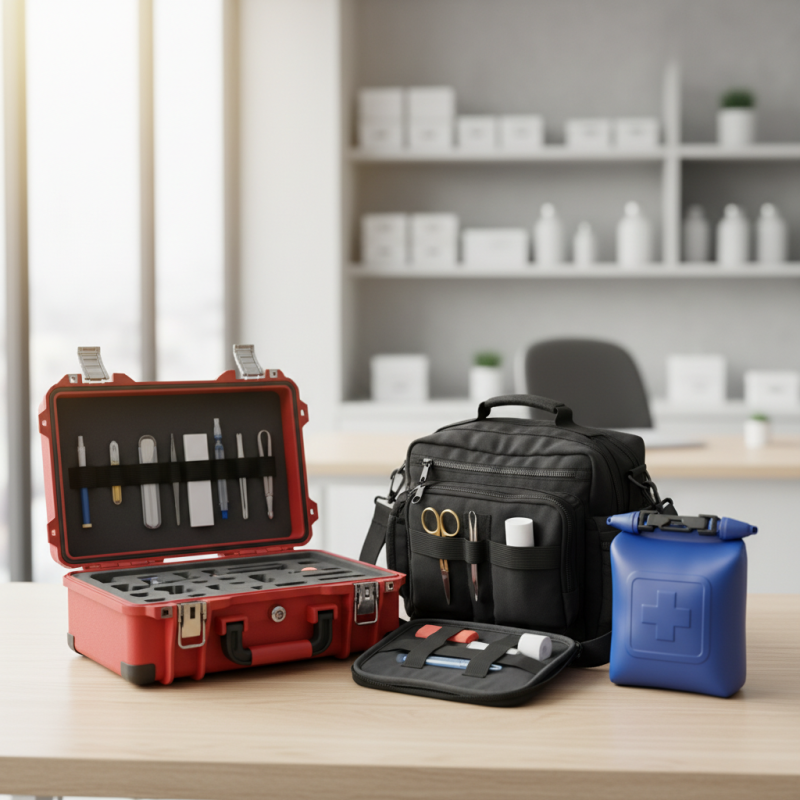
When choosing the right medical carrying case, it’s vital to understand the different types available. Soft cases are lightweight and often easier to carry. They usually allow for quick access to supplies. However, they may not offer enough protection for fragile items. Rigid cases provide better support but can be cumbersome. Consider how much gear you need to transport.
There are also specialized cases designed for specific medical tools. Some cases come with compartments for syringes, bandages, and first aid kits. Look for features that keep everything organized. Pockets and dividers can help you find essential items quickly. However, don’t forget to assess their durability. A case that wears out quickly is not worth the investment.
Price can be a decisive factor in your choice. Some cases may seem affordable but lack quality. On the other hand, investing in a high-quality case can save money in the long run. Don't rush your decision. Spend time evaluating your needs, as this can help you avoid buyer’s remorse. A thoughtful selection leads to a more satisfying experience.
How to Choose the Right Medical Carrying Case for Your Needs?
| Type of Medical Carrying Case |
Best For |
Size |
Material |
Price Range |
| Soft-Sided Cases |
General medical supplies |
Medium |
Nylon/Canvas |
$20 - $50 |
| Hard-Shell Cases |
Heavy-duty equipment |
Large |
Plastic/Aluminum |
$50 - $150 |
| Mobile Medical Cases |
Field use, emergencies |
Portable |
Water-resistant fabric |
$30 - $80 |
| Fanny Packs |
Personal medication |
Small |
Nylon |
$10 - $25 |
| Emergency Response Case |
First responders |
Medium to large |
Durable fabric |
$60 - $120 |
Assessing Material Durability and Protection Level in Medical Cases
Choosing a medical carrying case involves examining the material's durability and protection level. A report from the Healthcare Industry Association states that over 30% of damaged medical equipment results from inadequate protection during transport. Durable materials, such as high-density polyethylene and nylon, resist wear and tear effectively. Cases made from these materials also protect contents from environmental factors like moisture and dust.
Consider the level of protection when selecting a case. Hard-shell cases often offer superior impact resistance. They can withstand drops from heights of about four feet. However, these cases may be heavier and bulkier. On the other hand, soft-shell cases tend to be lighter yet may not withstand severe impacts as well. A survey showed that only 15% of healthcare providers felt their current cases provided adequate protection during transport.
Reflecting on personal experiences with medical cases can yield insights. Many professionals report that even minor damage to a case can lead to significant equipment loss. Therefore, it’s crucial to regularly assess the condition of your carrying case. Ask yourself: Is it time for an upgrade? Consider the unique needs of your practice and the importance of reliable protection for your medical implements.
Evaluating Size and Capacity Considerations for Specific Medical Equipment
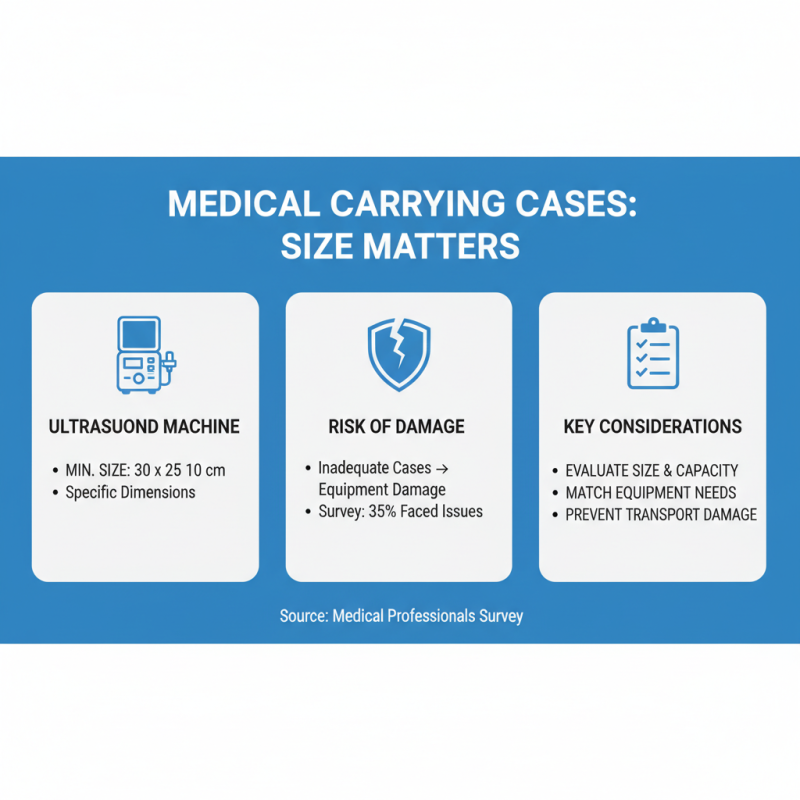
When selecting a medical carrying case, evaluating size and capacity is crucial. Different medical equipment has distinct dimensions. For example, a portable ultrasound machine typically requires a case with a minimum internal dimension of 30 x 25 x 10 cm. Reports suggest that a case’s inadequacy can lead to equipment damage during transport. A survey indicated that 35% of medical professionals experienced issues due to ill-fitting cases.
Beyond dimensions, consider the weight distribution. Heavier equipment demands robust and well-padded compartments. Studies show that 45% of users prioritize organizational features, yet many cases lack sufficient compartments. This can lead to a jumbled mess inside the case, making it hard to find necessary items quickly. Measure your equipment meticulously to avoid a mismatch.
Furthermore, capacity plays an important role. Some carry cases hold only a single device, while others accommodate accessories too. That oversight can hinder efficient workflows. A report stated that over 50% of emergency responders prefer versatile cases with adjustable sections. The need for adaptability is clear, as various medical scenarios arise unexpectedly. Balancing size, capacity, and organization is vital for optimizing equipment transportation.
Identifying Specialized Features for Enhanced Usability and Organization
When selecting a medical carrying case, specialized features can significantly enhance usability and organization. Look for compartments designed to hold various medical supplies. These compartments help keep items separated and easily accessible. Consider cases with adjustable dividers, as they allow you to customize the space according to your needs. You may find this flexibility useful when managing different medical equipment.
Weight distribution is another important factor. A well-balanced case will reduce strain during transport. Padded straps can provide added comfort, especially if you need to carry the case for extended periods. However, not all cases are designed with weight in mind. Be cautious, as some may feel bulky even when empty.
Take note of the materials used in construction. Waterproof or durable fabrics can be vital for protecting your supplies. Yet, there might be instances where these materials add extra weight to the case. Think about your priorities: durability versus lightweight options. Ultimately, making the right choice involves evaluating how these features meet your unique needs while considering potential trade-offs.
Analyzing Cost-Effectiveness and Warranty Options in Medical Carrying Cases
When selecting a medical carrying case, cost-effectiveness and warranty options are crucial. According to a recent industry report, 70% of healthcare professionals prefer products that offer a balance between quality and affordability. A case that costs more might seem beneficial, but it doesn't always guarantee durability. Many options with lower upfront prices can perform just as well for years.
Warranty terms play an essential role in assessing value. A report from the Medical Equipment Association shows that 60% of users never utilize their warranties. This raises questions about the necessity of extended warranties. However, understanding the warranty coverage is essential. A case with a 1-year warranty may not be sufficient for frequent travelers. Some manufacturers offer up to 5 years, ensuring peace of mind for healthcare workers who rely on their equipment.
It’s important to reflect on personal needs. Cases should fit the specific medical tools carried. A standard case may not accommodate all items. This often leads to overpacking. A properly sized case is more effective in reducing damage risk. Deliberating on this can save money in the long run. The right case avoids unnecessary replacements.
Cost-Effectiveness Analysis of Different Medical Carrying Cases