How to Choose a China Top Music Stand Carrying Bag Supplier?

Choosing a China Top Music Stand Carrying Bag Supplier requires more than comparing prices. A low quote may hide thin fabric, weak stitching, or inconsistent sizing. Your decision should begin with product evidence, factory experience, and transparent communication.

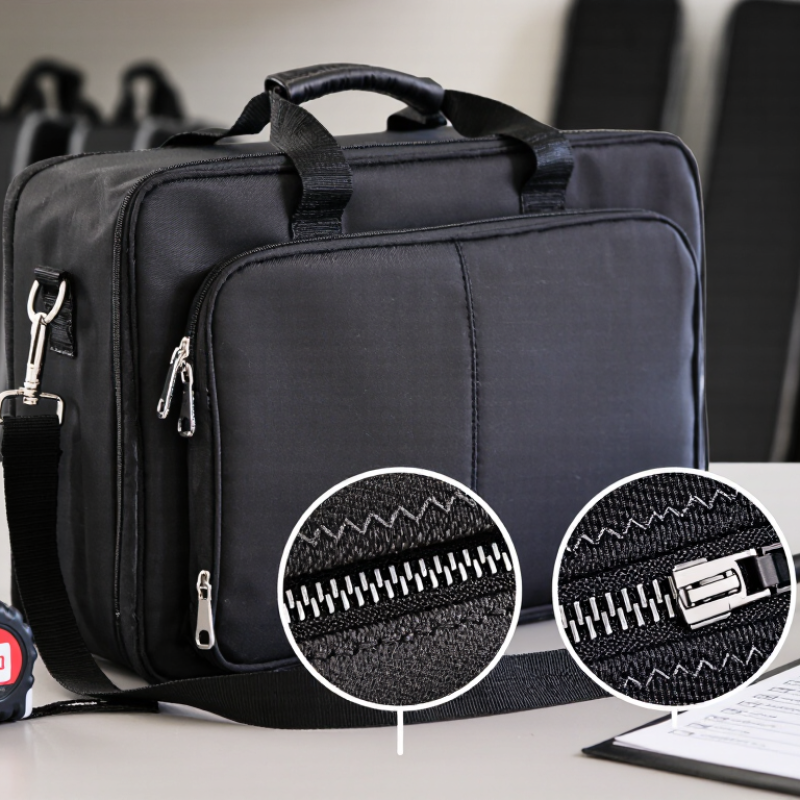
Jonathan P. Ellis, a musical-accessories sourcing consultant, offers a practical reminder: “A reliable bag supplier proves quality before requesting trust.” That principle matters when reviewing a Music Stand Carrying Bag. Ask for material specifications, seam photographs, zipper details, and recent production samples. A 600D polyester bag may resist daily stage use, but the stitching still needs careful inspection. Check whether the shoulder strap feels secure under a loaded stand. Test the handle repeatedly. Small details often reveal larger manufacturing habits.

Look beyond the sample. Confirm monthly capacity, minimum order quantities, lead times, packaging methods, and quality-control procedures. Request a pre-shipment inspection when order volume becomes significant. A dependable supplier should explain defects openly, not hide behind polished catalog images. Their responses should remain consistent across sales, production, and after-sales teams.

Still, no checklist guarantees perfect results. A sample can pass while a later batch changes slightly. That possibility deserves attention. Build written specifications, approval samples, and measurable acceptance standards into the agreement. Consider communication speed, too. Delayed answers can become delayed deliveries.

The strongest supplier is not always the cheapest. It is the partner that protects fit, durability, and customer confidence over time. Your evaluation should be practical, documented, and willing to question attractive promises.
How to Choose a China Top Music Stand Carrying Bag Supplier?

Define Your Music Stand Carrying Bag Requirements

How to Choose a China Top Music Stand Carrying Bag Supplier?

Define Your Music Stand Carrying Bag Requirements

Start with the stand, not the supplier. Record its folded length, widest point, weight, and sharp contact areas. A typical stand needs 5–10 centimeters of internal clearance for easy packing. Too much space causes movement. Too little space damages zippers and fabric.

The bag should use durable polyester or nylon, reinforced seams, and a padded base. A water-resistant coating helps during short outdoor transfers. It is not a substitute for waterproof construction. Grand View Research estimates the global musical instruments market will grow steadily through 2030, increasing demand for reliable accessories. That growth makes clear specifications more important. A supplier should provide fabric weight, coating details, zipper type, stitching samples, and test results. Ask for abrasion, seam-strength, and colorfastness checks.

Small details matter. A 5-kilogram carrying test can expose weak handles quickly. Measure the handle drop for comfortable shoulder clearance. Check whether the inner lining catches stand joints. An inspection checklist should cover dimensions, logo placement, padding thickness, carton protection, and tolerances. The tolerance may need revision after the first sample. That is normal. I have seen buyers approve attractive samples before testing repeated folding. This is a costly oversight. Request at least one pre-production sample and confirm the final material in writing. Also review the supplier’s quality records, production capacity, lead time, minimum order quantity, and corrective-action process before placing an order.

Explore China’s Supplier Types and Manufacturing Capabilities

Choosing a China music stand carrying bag supplier starts with understanding supplier types. Trading companies offer broad catalogs and faster communication. Direct factories provide deeper control over fabric, stitching, padding, and packing. Some workshops specialize in OEM production, while larger factories combine cutting, sewing, printing, and inspection under one roof. Grand View Research estimated the global musical instruments market at about US$9.7 billion in 2023. That growth increases demand for practical accessories, but supplier capacity still varies sharply.

Ask for production evidence, not attractive photographs. A capable factory should explain fabric weight, foam density, zipper performance, handle reinforcement, and allowable measurement tolerance. Request a sample made with production materials. Check stress points after repeated lifting, especially around shoulder straps and corner seams. A supplier serving export markets should maintain documented inspections, material traceability, and stable batch records. ISO 9001 principles can support consistency, though certification alone proves little.

I have found that supplier type affects risk as much as price. A trading company may coordinate several workshops, which helps flexibility but can weaken process visibility. A direct manufacturer may offer better revisions, yet its minimum order can be inconvenient. The World Trade Organization reported that manufactured goods remain central to China’s merchandise exports, showing strong industrial depth. Still, export scale does not guarantee careful workmanship. I would compare three samples, test them under realistic loads, and record every defect. My earlier mistake was trusting a polished sample too quickly.

How to Choose a China Top Music Stand Carrying Bag Supplier? - Explore China’s Supplier Types and Manufacturing Capabilities
Supplier Type Typical Manufacturing Focus Common Materials Typical MOQ Sample Lead Time Bulk Production Lead Time Customization Capability Quality-Control Strength Best Fit for Buyers
Cut-and-Sew Bag Factory Pattern cutting, stitching, padding, zipper installation, webbing attachment and final assembly. 600D polyester, 1680D polyester, oxford fabric, nylon, EVA foam and polypropylene webbing. Usually 300–1,000 pieces per color or design. 7–15 working days after artwork and materials are confirmed. 25–45 working days, depending on order quantity and fabric availability. High
Custom size, compartments, handles, straps, pockets, labels and packaging.
Strong control over sewing quality, dimensions, padding and hardware installation. Retailers, importers and music-accessory distributors needing a practical customized carrying bag.
Soft-Case Specialist Protective cases for instruments and accessories, with emphasis on padding, fit and portability. Water-resistant polyester, nylon, PE foam, EVA foam, tricot lining and reinforced fabric. Usually 200–800 pieces per model. 10–20 working days, especially when a new mold or fitting sample is required. 30–55 working days for customized production. High
Instrument-specific fitting, foam thickness, lining, shoulder straps and protective panels.
Good protection testing, seam inspection, zipper testing and fit verification. Buyers who want enhanced protection for folding music stands during transport and storage.
Luggage and Travel-Bag Factory High-volume production using standardized bag construction, industrial sewing and travel-bag hardware. Polyester, nylon, coated fabric, metal or molded plastic hardware and foam padding. Usually 500–2,000 pieces per design. 10–18 working days for standard construction; longer for custom fittings. 30–50 working days after pre-production approval. Medium to High
Strong in handles, trolley-compatible sleeves, adjustable straps and reinforced stress points.
Consistent production processes and efficient inspection for large quantities. Large-volume buyers prioritizing transport durability, standardized quality and competitive unit cost.
Promotional Bag Manufacturer Cost-efficient production of simple bags for events, schools, training programs and promotional campaigns. 210D or 420D polyester, non-woven fabric, cotton, basic lining and lightweight webbing. Often 500–3,000 pieces per design. 5–12 working days for simple samples or printed prototypes. 15–35 working days for straightforward designs. Medium
Good for printed logos, basic colors, simple pockets and standard dimensions.
Suitable for basic appearance and quantity checks; heavy-duty protection may be limited. Promotional orders, school programs, event merchandise and price-sensitive projects.
Outdoor and Protective-Gear Factory Durable bag construction for outdoor use, including abrasion resistance, weather protection and reinforced seams. Ripstop nylon, 600D–1680D polyester, PVC-coated fabric, EVA foam and durable hardware. Usually 300–1,500 pieces per model. 10–20 working days for functional samples. 30–60 working days, depending on material testing and construction complexity. High
Water-resistant construction, reinforced bottoms, padded dividers and heavy-duty straps.
Strong abrasion, seam, load-bearing and water-resistance evaluation capabilities. Professional users, touring musicians and buyers requiring greater protection and outdoor durability.
Trading Company with Partner Factories Supplier coordination, product sourcing, order management, inspection and export documentation. Material selection depends on the partner factory and approved product specification. Often 100–500 pieces, depending on the selected production line. 7–20 working days, depending on factory availability and sample requirements. 25–60 working days, depending on supplier coordination and order complexity. Medium to High
Flexible sourcing, but manufacturing control varies by partner factory.
Can provide third-party inspections; production traceability should be verified before ordering. Small and medium-sized buyers needing flexible sourcing, mixed products or export support.
Integrated OEM/ODM Manufacturer Product development, material sourcing, pattern engineering, sample approval and mass production under one system. Polyester, nylon, oxford fabric, EVA, PE foam, mesh, PU leather and custom hardware. Commonly 300–1,000 pieces, with higher requirements for complex designs. 10–25 working days for technical development and prototype approval. 30–60 working days after the final sample is approved. Very High
Suitable for original patterns, functional upgrades, packaging systems and multiple colorways.
Better control of specifications, production records, incoming materials and final inspections. Buyers building a long-term product line or requiring a distinctive, specification-controlled design.
Benchmark note: The quantities and lead times above are typical China manufacturing ranges for customized soft bags and may vary according to design complexity, order volume, material availability, seasonality, testing requirements and packaging specifications. Buyers should confirm the exact MOQ, sample approval process, inspection standard and delivery schedule in the purchase agreement.

Evaluate Materials, Construction, and Customization Options

A reliable music stand carrying bag supplier should explain what each fabric can handle. Ask for the fabric weight, coating type, and abrasion test details, not just “heavy-duty” claims. Polyester is often lightweight and easy to clean; thicker woven fabrics may resist scuffs better but add weight. Check whether water resistance applies to the fabric only or also to seams and zippers. Small distinction. It matters in a damp loading area.

Inspect a physical sample with a stand inside. The bag should close without forcing the zipper, and the stand’s feet should not press sharply against the bottom panel. Look for reinforced stitching at handles, strap anchors, and corners. Padding can protect painted surfaces, but excess padding may make the bag bulky. Ask how the supplier checks dimensions across production batches. A size chart alone may miss awkward stand shapes.

Customization is useful when you need a specific length, shoulder strap, pocket, or printed label. Confirm minimum order quantities, sample costs, artwork requirements, and production lead times in writing. Request a pre-production sample before approving a large order. One detail is easy to overlook: a useful accessory pocket can snag stand parts if placed poorly. There is no perfect layout for every user, so compare the sample against the stands your customers actually carry.

Compare Pricing, Minimum Orders, Lead Times, and Trade Terms

Choosing a China-based music stand carrying bag supplier means comparing landed cost, not just unit price. Request tiered quotes at quantities that match your forecast, such as 100, 500, and 1,000 bags. Confirm fabric weight, padding thickness, zipper specification, logo method, carton size, and inspection fees. These details change costs. Ask for sample charges, tooling fees, and quote validity separately. A low minimum order may mean a higher unit price; a large order can tie up cash in slow-moving stock.

Split lead time into sample development, approval, material sourcing, production, inspection, and transit. Ask which stages begin only after your written approval. For sea freight, UNCTAD’s Review of Maritime Transport 2024 reports that shipping carries over 80% of world merchandise trade by volume. That matters. Port congestion and route changes can still disrupt arrival dates, so request a shipment window and a realistic buffer—not one optimistic date.

Compare trade terms using the same named port and Incoterms version. The International Chamber of Commerce’s Incoterms 2020 includes 11 rules that allocate delivery responsibilities, costs, and risks. FOB, CIF, and DDP can produce very different landed costs; confirm who handles freight, insurance, customs clearance, and import charges. Incoterms do not set payment timing or product quality. Small print matters. Even a careful spreadsheet can miss a local handling fee, so verify the final charges with your forwarder.

How to Choose a China Top Music Stand Carrying Bag Supplier?

Suggested weighting for comparing supplier quotations. These are evaluation priorities, not quoted supplier prices or market averages.

Compare written quotations using the same product specifications. Check unit pricing at your target quantity, minimum order requirements, production lead times, and trade terms such as payment conditions and shipping responsibility. Adjust the weights to match your purchasing priorities.

Verify Samples, Compliance, Communication, and After-Sales Support

A dependable music stand carrying bag supplier should make sample checks easy and specific. Request a finished bag in the fabric, color, and size you plan to order. Load it with a typical stand, then check the zipper, handle stitching, and shoulder strap under weight. Measure the inner length and width; a few centimeters can affect fit. Small details matter. Ask whether the production version will use the same materials and construction as the sample. It is worth asking twice if the answer is vague.

Review compliance documents that relate to the product and its materials, and confirm that names, dates, and specifications match the quoted item. Ask for inspection criteria, such as seam strength, zipper function, and measurement tolerances. A document alone is not proof of consistent production, so clarify how checks are recorded for each order. Requirements can differ by destination, so confirm the relevant paperwork with your own import or quality team.

Communication is also part of supplier quality. Notice whether replies answer the question, include measurements, and flag limitations instead of promising everything. Keep specifications and approved sample details in writing. Before ordering, ask who handles defects, replacement parts, and shipping damage, and how quickly they respond. A clear process helps. Still, even careful suppliers can miss a detail; agree on photo evidence and a practical resolution before production begins.