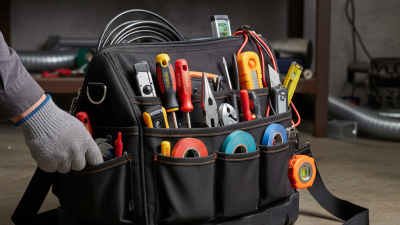
What Is the Best Tool Storage Bag to Buy?

Choosing the best Tool Storage Bag is less about owning the most pockets. It is about protecting tools, reducing wasted movement, and carrying the right weight through real working conditions. Grand View Research reports that the global hand tools market continues to expand, while the U.S. Bureau of Labor Statistics recorded more than 1.5 million construction and extraction workers in 2023. More working tools create a simple problem: storage must become smarter.

Visibility matters.

A reliable bag should keep screwdrivers upright, fasteners contained, and sharp edges away from fabric. It should also survive dust, rain, vehicle floors, and repeated lifting. The Occupational Safety and Health Administration emphasizes maintaining tools in safe, usable condition, although it does not rank specific storage bags. That gap matters. Many buying guides discuss capacity, but fewer test seam strength, handle comfort, or balance under load.

Professional organizer and tool-storage educator David Farrington describes the practical principle this way: “The best storage system is the one that makes the right tool easy to find.” That idea is useful, even if it does not answer every buying question. A bag can look rugged and still collapse when loaded. A waterproof base may protect tools, but add uncomfortable weight. A large opening improves access, yet allows small parts to disappear.

This guide compares materials, compartments, portability, protection, and value. The “best” choice may not be the largest. It may be the bag that stays stable beside a ladder, opens with one hand, and still feels manageable at day’s end.

What Is the Best Tool Storage Bag to Buy?

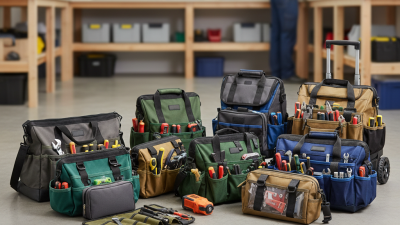
Define Tool Bag Types by Capacity, Layout, and Professional Trade Use

What Is the Best Tool Storage Bag to Buy?

Define Tool Bag Types by Capacity, Layout, and Professional Trade Use

The best tool storage bag is not always the largest one. It should match your daily workload, transport distance, and trade. A compact 12 to 20 liter bag suits service calls with pliers, drivers, testers, and small fasteners. It stays light beside a ladder or inside a vehicle. For installation work, a 25 to 40 liter bag offers room for power tools, batteries, chargers, and protective equipment. Bigger bags help, but they become tiring quickly.

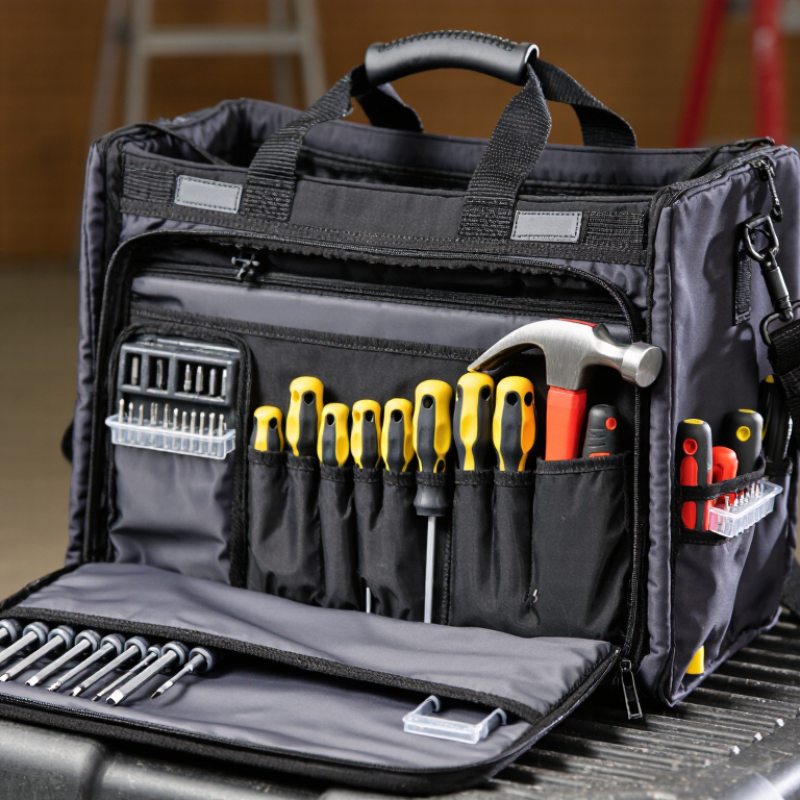
Layout often matters more than capacity. Open-top designs provide fast access when tools change constantly. Zipped compartments protect delicate meters and reduce loose parts. Vertical pockets keep long drivers visible, while wide central spaces hold bulky equipment. A reinforced base is useful on wet floors and rough building sites. Check the handle stitching and shoulder strap padding. These details reveal real durability.

Choose the layout around your professional trade. An electrician may need insulated hand tools, cable cutters, and testing equipment. A carpenter often needs measuring tools, bits, fasteners, and compact power tools. A maintenance technician may prefer many small pockets for mixed equipment. I once selected a bag with excessive capacity and carried unused tools for weeks. That was poor judgment. Count the tools you actually use, then leave space for gloves, labels, and unexpected repairs. A quick pocket audit can expose unnecessary weight. Shorter trips need less storage. Frequent travel needs better balance, not simply more room.

What Is the Best Tool Storage Bag to Buy? - Define Tool Bag Types by Capacity, Layout, and Professional Trade Use

Tool Bag Type Typical Capacity Typical Layout Common Tool Load Best Professional Trade Use Main Advantages Important Limitations
Compact Tool Pouch 3–8 L Open-top or semi-open design with a few exterior pockets and a belt loop Driver, pliers, tape measure, utility knife, fasteners, and a small number of hand tools Service technicians, electricians, installers, and maintenance workers performing short tasks Lightweight, quick access, easy to carry on a belt, and suitable for keeping essential tools within reach Limited capacity; provides little protection for bulky or delicate equipment
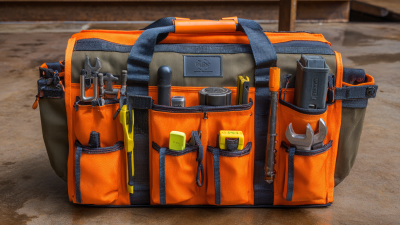
Open-Top Tote Bag 12–25 L Wide rectangular opening with internal compartments and exterior slip pockets Hand tools, cordless drill, chargers, small boxes of hardware, and personal protective equipment General contractors, carpenters, electricians, and property maintenance professionals Fast tool visibility, broad access, flexible storage, and a practical balance between capacity and portability Tools can shift during transport; contents are exposed to rain and dust unless the bag has a cover
Zippered Tool Bag 10–30 L Single main compartment with a full-length zipper and optional internal or external pockets Hand tools, measuring devices, small power tools, cables, and consumables Field service, HVAC maintenance, electronics installation, and repair work Enclosed storage helps prevent tool loss and offers better protection from dust and light moisture Access is slower than an open tote; a narrow opening can make larger tools difficult to retrieve
Structured Tool Bag 20–40 L Rigid or semi-rigid base, reinforced walls, vertical tool pockets, and a wide opening Mixed hand tools, one or two cordless tools, batteries, chargers, and job-specific accessories Electricians, plumbers, installers, and service professionals who carry a daily tool assortment Stays upright, improves organization, protects contents, and makes individual tools easier to identify Heavier and less compressible than soft bags; may occupy more vehicle or storage space
Drill and Power Tool Bag 8–20 L Padded central compartment with dividers or sleeves for a drill, batteries, charger, and accessories One or two cordless tools, batteries, charger, bits, blades, and small hand tools Carpenters, installers, electricians, and mobile repair workers using cordless equipment Protects power tools, separates batteries and accessories, and reduces unnecessary carrying weight Specialized layout can waste space when carrying a large selection of hand tools
Rolling Tool Bag 30–70 L Large internal compartment, multiple pockets, telescoping handle, and two or four wheels Power tools, hand tools, batteries, chargers, test equipment, and job-site supplies Contractors and technicians transporting heavy tool loads across offices, buildings, or job sites Reduces lifting strain, carries more equipment, and provides organized storage for larger tool collections Bulkier on stairs and uneven ground; wheels and handles add weight and can wear over time
Backpack Tool Bag 20–40 L Multiple vertical compartments, padded back panel, shoulder straps, and often a reinforced base Hand tools, compact power tools, meters, laptop or tablet, safety equipment, and small parts Electricians, network installers, telecom technicians, and workers who climb stairs or ladders Leaves both hands free, distributes weight across the body, and works well in confined or elevated locations Weight must be packed carefully; deep compartments may make small tools harder to locate
Tool Bucket Organizer 15–25 L Flexible organizer fitted around a bucket, with numerous exterior pockets and an open center Hand tools, fasteners, sealants, small parts, and frequently used accessories Maintenance, plumbing, landscaping, construction finishing, and quick-access repair tasks Excellent pocket count, inexpensive format, fast access, and useful for separating small tools and supplies Usually lacks a secure closure and offers limited protection against impact, rain, and theft
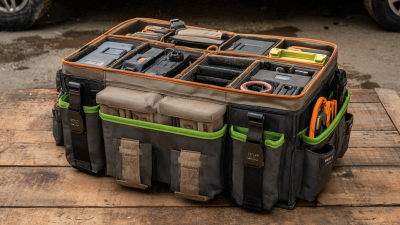
Modular Tool Storage Bag 25–60 L per connected unit Stackable or attachable bags, removable organizers, reinforced bases, and interchangeable compartments Mixed hand tools, power tools, batteries, parts organizers, and trade-specific equipment Professional tradespeople who need to expand or reconfigure storage for different jobs Highly adaptable, supports job-specific packing, and can separate heavy tools from small components Usually costs more and may become heavy or cumbersome when several modules are connected
Water-Resistant Tool Duffel 35–80 L Large zippered cavity with reinforced handles, shoulder strap, and limited internal organization Bulky power tools, extension cords, protective equipment, workwear, and irregularly shaped supplies Construction crews, outdoor maintenance teams, and workers transporting high-volume equipment High capacity, flexible shape, easy loading, and suitable for oversized items Lower tool visibility and organization; water-resistant fabric is not always fully waterproof
Technician Case or Semi-Rigid Case 8–25 L Hard or semi-rigid shell with fitted foam, removable trays, or dedicated instrument compartments Test meters, diagnostic instruments, precision tools, connectors, and sensitive electronic equipment Instrumentation, automation, electronics repair, laboratory service, and calibration work Provides strong impact protection, controlled organization, and improved protection for sensitive equipment Less flexible than a fabric bag and typically offers lower capacity for bulky tools

Selection guide: Choose a pouch for essential hand tools, a tote or structured bag for everyday trade work, a backpack for stair and ladder access, a rolling bag for heavy loads, and a semi-rigid case when equipment protection is more important than maximum capacity.

Compare 600D, 1000D, and 1680D Fabrics by Denier and Abrasion Resistance

What Is the Best Tool Storage Bag to Buy?

Denier measures yarn weight, not fabric quality by itself. A 600D tool bag uses lighter yarn and usually feels more flexible. It suits light hand tools, indoor work, and occasional transport. However, repeated contact with concrete can wear its outer surface faster. I have found 600D bags easier to carry, but their corners often show damage first.

A 1000D fabric offers a stronger middle ground. Its denser yarn usually resists scraping against vehicle floors, ladders, and rough workshop surfaces. It still bends enough for regular loading and unloading. For many users, this balance matters more than maximum toughness. Yet, denier does not guarantee durability. Weak stitching or a thin coating can undermine a heavy fabric.

A 1680D bag generally provides the highest abrasion resistance among these options. Its thick weave feels firm and protects tools during demanding transport. It works well for mechanics, contractors, and anyone who stores bags in harsh conditions. The trade-off is noticeable weight and reduced flexibility. A stiff bag can also waste space when partly empty.

Check reinforced corners, bar-tacked handles, zipper quality, and the fabric backing. Those details often reveal more than the denier label. My first assumption favored 1680D, but daily carrying changed my view. The best choice depends on how often the bag meets sharp edges, dust, and hard floors.

Verify Water Protection Through IEC 60529 IP54–IP67 Rating Criteria

What Is the Best Tool Storage Bag to Buy?

Water protection should be verified through IEC 60529, not vague words like “weatherproof.” The standard defines the IP code’s first digit for solids and the second digit for water. An IP54 bag resists limited dust entry and water splashes from every direction. It is suitable for light rain, but not standing water. IEC 60529 specifies water testing at 10 litres per minute for IPX4 protection.

Higher ratings demand closer inspection. IP65 means dust-tight protection and resistance to water jets. IP66 withstands more powerful jets. IP67 adds temporary immersion protection, typically up to one metre for 30 minutes. However, IP67 alone does not automatically prove strong jet resistance. A bag marked IP66/IP67 provides clearer evidence across both hazards. This distinction is easy to miss.

The 2024 IEC conformity-assessment guidance emphasizes documented testing, product construction, and declared test conditions. Look for a test report identifying the complete bag, including zippers, seams, and closures. A rating tested only on a rigid container may not represent a flexible tool bag. My practical mistake was trusting a sealed fabric panel while ignoring the zipper. Water found the weakest point. Also check whether tools sit above the base, where condensed moisture can collect. Market reports on professional tools repeatedly identify durability and jobsite mobility as purchasing priorities, but durability is not the same as water protection. Ask for the exact IP level, test method, and certificate date before buying.

Evaluate 10–40 L Capacity, Load Ratings, Handles, and Shoulder Support

Choosing the best tool storage bag starts with capacity, not appearance. A 10-liter bag suits meters, drivers, and a few hand tools. It stays compact in a vehicle or under a workbench. A 20-liter model handles a broader repair kit without feeling bulky. For heavier equipment, 30 to 40 liters offers useful room, but empty space can encourage overpacking. I learned this after carrying a bag that looked manageable. It was not.

Check load ratings before trusting the stitching. A stated 15-kilogram rating should cover your normal load with some margin. Tools shift while walking, so seams experience more stress than a shelf does. Reinforced handles should be securely stitched around the bag body. Short handles help with lifting. Longer handles improve balance when the bag is full. Test the grip with gloves; narrow webbing can cut into your palm. Small detail, big difference.

Shoulder support matters above 20 liters. Look for a padded, adjustable strap with stable connection points. A removable strap is useful when it gets in the way. Still, padding cannot fix poor weight distribution. Place dense tools low and near the center. Internal pockets prevent loose metal from collecting at the bottom. Water resistance helps, but it is not waterproof protection. Product measurements can also be optimistic. Measure your largest tool before buying, and leave room for your hands.

Choose the Best Tool Bag by ASTM Textile Tests, Warranty, and Total Cost

What Is the Best Tool Storage Bag to Buy?

The best tool bag is not always the largest or cheapest option. In daily field use, fabric strength matters more than appearance. Look for documented ASTM textile tests covering abrasion, tear strength, tensile strength, and seam performance. These tests show how material may handle rough floors, sharp tool edges, and repeated loading. However, test results are not the whole story. Different laboratories may use different methods, so compare identical ASTM procedures whenever possible. A strong fabric can still fail if stitching is weak. Check reinforced corners, bar-tacked handles, and smooth, secure zippers.

Warranty terms also deserve careful attention. A longer warranty may signal stronger manufacturing confidence, but exclusions can be surprisingly broad. Read the coverage for seams, handles, zippers, and normal wear. Some warranties cover defects only, not damage caused by heavy use. That distinction matters. I once focused too much on fabric thickness and ignored handle comfort. The bag survived, but carrying it felt inefficient. Total cost includes the purchase price, replacement parts, transport, downtime, and possible replacement bags. Cheap is not cheap. A moderately priced bag may cost less over several years if it protects tools and stays comfortable.

Tips: Request the ASTM test details, not just a general “tested” claim. Compare warranty length and exclusions. Estimate your real load before buying. Leave room for future tools. Overpacking shortens a bag’s life. My own mistake was buying extra space that encouraged unnecessary weight. A smaller, organized bag may be the better investment.