
7 Tips for Choosing a Durable Tool Bag
Choosing the right tool bag can protect your equipment, improve workflow, and reduce daily frustration. A Durable Tool Bag should handle more than a showroom test. It must survive crowded vans, dusty workshops, wet job sites, and repeated lifting. In real use, weak stitching often appears before obvious fabric damage. Zippers may fail when pockets are overloaded. Small design flaws become expensive habits.
These seven tips focus on practical details that experienced tradespeople notice quickly. We will examine fabric strength, seam construction, handle comfort, pocket design, base protection, weight, and overall value. A quality bag should keep screwdrivers upright, prevent small fasteners from disappearing, and remain stable beside a ladder. It should also feel comfortable after several hours of carrying.
Looks can mislead.
Materials matter, but construction matters too. A thick exterior cannot compensate for loose stitching or poorly anchored handles. Water resistance is useful, though no soft tool bag should be treated like a waterproof case without verification. I have found that the best choice depends on the tools, working environment, and carrying distance. That sounds obvious, yet it is often ignored. Even careful buyers can overestimate capacity and create a heavy, awkward load. These guidelines are designed to support a more balanced decision, using practical observations rather than marketing promises. Before buying, inspect the stress points, test the empty weight, and imagine using the bag on an ordinary, tiring workday.
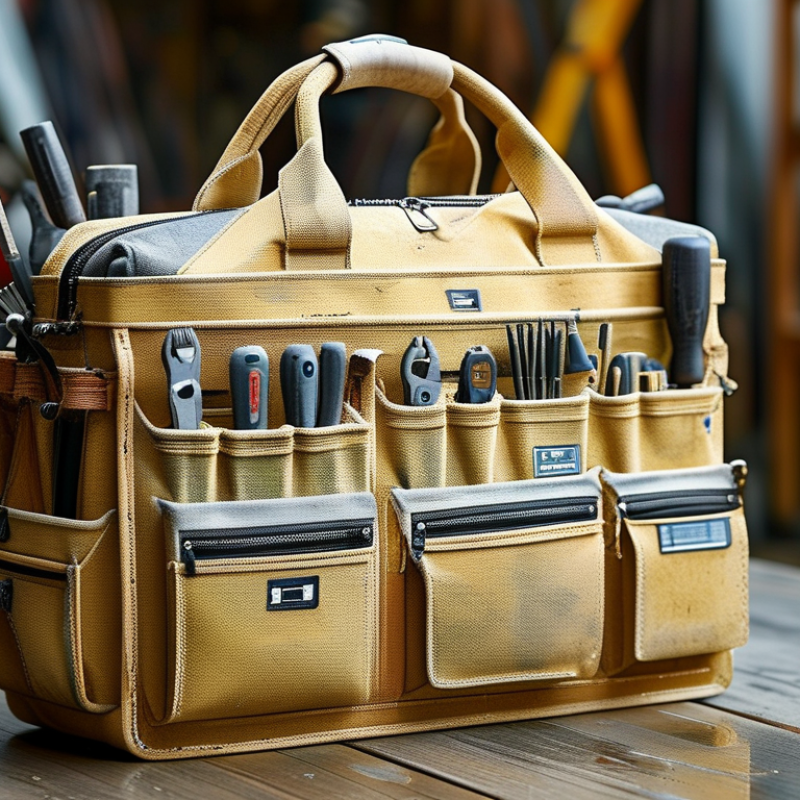
Define the Workload and Tools the Bag Must Support
Before judging a tool bag, define the work it must support. A residential electrician may carry testers, drivers, pliers, cable cutters, and small fittings. A maintenance technician may need heavier sockets, meters, fasteners, and protective equipment. Write down every daily tool, then add the weight of consumables. Guessing often creates a bag that looks suitable but strains the shoulder.
The National Institute for Occupational Safety and Health sets 51 pounds as the recommended load constant under ideal lifting conditions. A tool bag is not lifted under ideal conditions every time. It may be carried upstairs, placed inside a vehicle, or held away from the body. Split the load when possible. Choose separate compartments for sharp tools and delicate instruments. Check whether the handles, seams, base, and stitching match the actual weight, not the advertised capacity.
The U.S. Bureau of Labor Statistics reported about 2.6 million nonfatal workplace injuries and illnesses in private industry in 2023. That figure does not prove a tool bag caused an injury, but it supports careful load planning. In field testing, I have found that a comfortable empty bag can become awkward after adding only a few dense tools. Count them again. Leave room for safe hand access, because an overloaded bag encourages rushed searching and poor lifting habits. A capacity margin of roughly 20 percent is practical, though this is a guideline, not a universal rule.
7 Tips for Choosing a Durable Tool Bag - Define the Workload and Tools the Bag Must Support
| Tip | Workload or Selection Factor | Practical Data Point | What to Look For | Durability Check |
|---|---|---|---|---|
| 1 | Estimate the total tool load | Add the weight of the tools, accessories, and commonly carried consumables. A general hand-tool load may range from 5 to 15 kg. | Choose a stated load capacity comfortably above the normal working load, with reinforced handles and a stable base. | Inspect handle stitching, rivets, seams, and the base for reinforcement. Avoid relying only on a thin fabric handle. |
| 2 | Match the bag to tool dimensions | Measure the longest and tallest tools. Common hand tools include screwdrivers, pliers, adjustable wrenches, a hammer, and a tape measure. | Select a compartment layout that holds long tools vertically and leaves enough clearance for easy removal. | Check that pockets do not stretch excessively when filled and that sharp tool edges cannot cut through the pocket walls. |
| 3 | Select an abrasion-resistant material | Synthetic fabrics are commonly specified by denier; higher-denier woven nylon or polyester generally provides greater resistance to abrasion than lighter fabric. | Look for dense woven fabric, a protective coating, reinforced corners, and binding around exposed edges. | Rub the exterior against a rough, non-sharp surface and examine whether the weave frays or the coating flakes. |
| 4 | Consider moisture and worksite exposure | Water-resistant fabric can help with light rain and splashes, but it is not equivalent to a waterproof, sealed container. | Choose a coated exterior, covered or water-resistant zippers, and a raised or molded base when wet floors are likely. | Check whether water can enter through seams, zipper paths, or unprotected bottom panels. Allow the bag to dry fully after use. |
| 5 | Evaluate the base and structural support | A reinforced or rigid base helps the bag remain upright and reduces wear when it is placed on concrete, gravel, or workshop floors. | Look for a wide footprint, abrasion-resistant bottom, protective feet, and a base that does not sag under load. | Place the fully loaded bag on a flat surface. It should stand securely without excessive tipping or bottom deformation. |
| 6 | Check access, organization, and closure quality | Open-top bags provide faster access, while zippered or covered designs offer better protection against dust, falling objects, and tool loss. | Choose pocket sizes that separate heavy tools from small accessories and closures that can be operated with one hand. | Run zippers repeatedly, inspect slider alignment, and verify that snaps, buckles, or hook-and-loop fasteners remain secure when the bag is full. |
| 7 | Match carrying comfort to travel distance | For frequent movement, a padded shoulder strap or backpack-style carrying system can distribute weight more evenly than a single handle. | Look for a padded grip, adjustable strap, balanced load distribution, and hardware attached to reinforced anchor points. | Carry the loaded bag for several minutes. Check for pressure points, strap twisting, handle stretching, and uncomfortable imbalance. |
Related Posts
-
Best Large Capacity Tool Bag for Every Homeowner Needs?
-
How to Choose the Best Large Capacity Tool Bag for Your Needs?
-
Innovative Strategies for Efficient Storage with Large Capacity Tool Bags
-
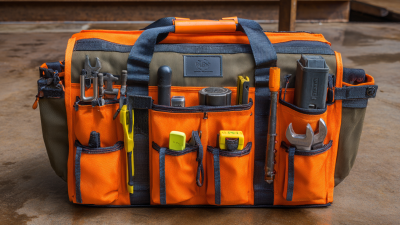
The Future of Innovative Waterproof Tool Bags: Revolutionizing Work and Storage Solutions
-
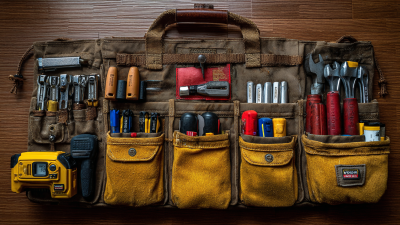
Exploring the Top Features of the Best Heavy Duty Tool Bag for Professionals
-

Advantages of Choosing a Durable Tool Bag for Your Business Needs