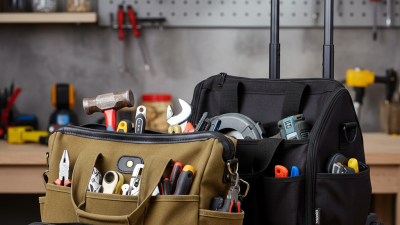
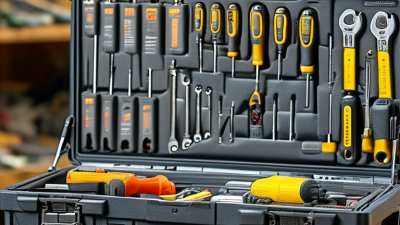
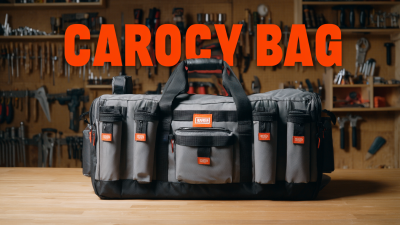
Global buyers need more than a larger bag. They need capacity, balance, durability, and dependable access on demanding job sites. A well-designed Large Capacity Tool Bag should carry drills, meters, fasteners, cables, and protective equipment without becoming unstable.
Market evidence supports this demand. Grand View Research reports that the global hand tools market continues expanding through construction, maintenance, manufacturing, and infrastructure investment. Allied Market Research also identifies professional construction and industrial users as major forces behind tool-storage demand. These reports do not measure every Large Capacity Tool Bag directly. That limitation matters. Category data remains fragmented, and buyer claims should be checked against specifications.
Ergonomics deserves equal attention. Dr. Alan Hedge, a respected workplace ergonomics researcher, stated, “Ergonomics is the science of designing the workplace to fit the worker.” That principle applies inside a tool bag. A reinforced base, padded shoulder strap, wide opening, and balanced compartments can reduce awkward lifting. Small details matter. Wet floors expose weak fabric. Sharp drill bits expose poor internal organization.
Our 2026 comparison examines load rating, fabric denier, stitching, zipper quality, weather resistance, compartment design, and carrying comfort. We also consider supplier consistency, warranty support, and shipment practicality for international buyers. A 50-pocket bag is not automatically better. More pockets can reduce usable space and increase weight.
The honest question is simple: can the bag remain comfortable after a full working day? Some products look impressive online but fail under repeated loading. Real use reveals the difference.
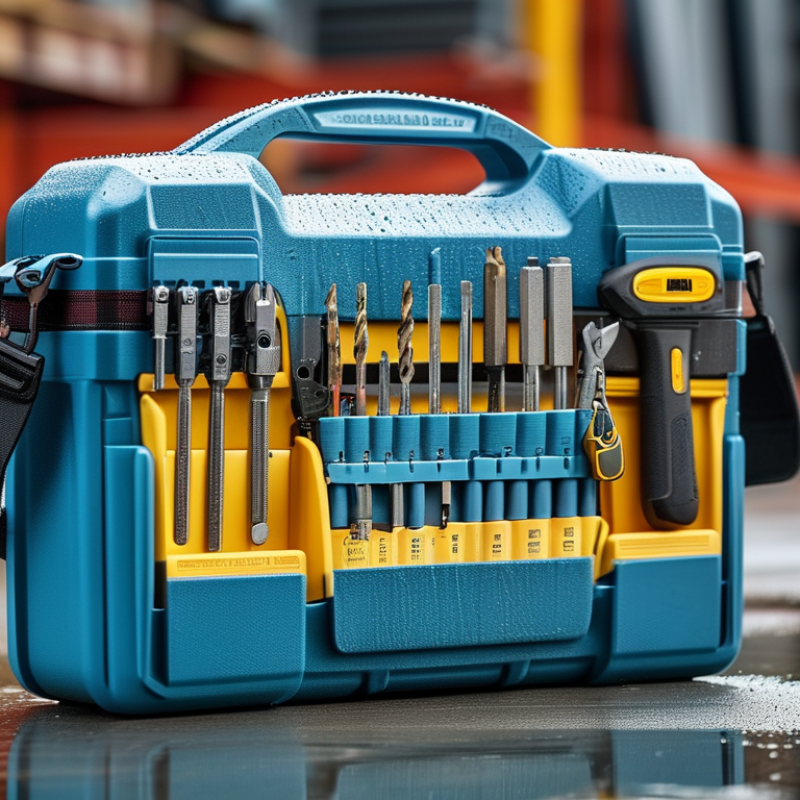
A large-capacity tool bag usually holds 20–60 liters. That range suits electricians, maintenance teams, and mobile technicians. Smaller bags stay easier to carry. Larger models store bulky meters, drills, cables, and protective equipment. Capacity alone can mislead. A 40-liter bag with poor organization may waste more space than a 30-liter bag with efficient compartments.
Check the internal layout carefully. Look for reinforced pockets, removable dividers, and a separate section for sharp tools. Wide openings improve visibility on busy job sites. Padded handles and a balanced shoulder strap reduce strain during transport. The load rating matters too. A bag rated for 15 kilograms should not routinely carry 20 kilograms. Overloading can damage stitching and make lifting unsafe. I have found that published ratings sometimes lack testing details. Buyers should request material, seam, and load-test information from suppliers.
Tips: Measure your daily tool set before choosing capacity. Leave around 15% unused space for unexpected equipment. Inspect the base, zippers, and stitching closely. A waterproof bottom helps on wet pavement, but it may not protect tools from heavy rain. Ask for clear dimensions, net weight, and carton details before international purchasing. Photos can hide weak structure. A sample inspection remains wiser.
A large tool bag should carry more than tools; it should protect the worker’s body. NIOSH’s 51-pound Recommended Weight Limit applies to specific lifting conditions. It is not a universal safe limit for prolonged carrying. Distance, posture, grip quality, and lifting frequency change the real demand.
For global buyers, inspect the bag with a loaded trial. Place a scale under the bag, then add common tools, fasteners, and testing equipment. A 30-pound load can feel heavier when the contents shift against one side. Wide handles, padded shoulder straps, and a firm base help control that movement. A waist strap may improve stability, but it cannot correct excessive weight. Wheels are useful on smooth floors, yet stairs and rough ground still require lifting.
Capacity can mislead. More pockets often encourage unnecessary loading. I once treated empty space as a benefit, then carried items that were rarely used. That choice increased fatigue without improving field performance. Buyers should check handle stitching, zipper resistance, water protection, and balance under uneven loading. Workers with different body sizes may need different strap lengths and carrying methods. A careful selection also considers local transport conditions, because warehouse floors, job sites, and public steps rarely match product photographs. Test the packed bag close to the body, keep heavier tools low, and reassess the load during the workday.
2026 Best Large Capacity Tool Bag for Global Buyers?
A large tool bag must survive weight, abrasion, moisture, and repeated loading. Fabric denier matters, but it does not tell the complete durability story. A 600D polyester fabric suits moderate workshop use, while 1680D fabric offers a tighter, heavier outer layer for sharp tools and rough transport. The 2024 Textile Exchange Materials Market Report recorded global fiber production at about 132 million tonnes in 2023. That scale increases material choices, but quality still depends on yarn strength, coating, stitching, and inspection. ASTM D5034 can evaluate grab tensile strength. ASTM D3884 measures abrasion resistance. ASTM D1683 examines seam strength. These tests create useful evidence, not marketing assumptions.
Tips: Request the fabric specification, coating details, test method, and laboratory conditions. Compare results using the same ASTM procedure. Check bartacks around handles and corners. A strong panel can still fail at a weak seam. Test samples with realistic loads, including metal tools, before larger orders. Do not confuse 1680D with automatic superiority; fabric weight may increase bulk and reduce flexibility. In my experience, overloaded bags often fail at handles first. That detail is easy to miss. Test reports can also be incomplete, especially when they show fabric results without finished-bag testing. Reliability improves when buyers inspect tensile strength, abrasion cycles, seam performance, and zipper operation together.
| Fabric Construction | Typical Fiber | Nominal Yarn Denier | Typical Fabric Weight* | Common Coating | Recommended ASTM Tests | Durability Profile | Best Use in a Large Tool Bag |
|---|---|---|---|---|---|---|---|
| 600D Oxford | Polyester | 600D warp and/or weft yarn | Approximately 250–350 g/m² | PU or PVC coating; water-repellent finish may be added |
ASTM D3776: mass per unit area ASTM D5034: grab tensile strength ASTM D2261: tongue tear strength ASTM D3884: abrasion resistance |
Light to medium duty Good balance of weight, cost, and everyday wear resistance. |
Interior panels, pockets, light-duty tool compartments, and general-purpose bags. |
| 900D Oxford | Polyester | 900D warp and/or weft yarn | Approximately 350–450 g/m² | PU coating is common; PVC is used where higher water resistance is required |
ASTM D5034: tensile strength ASTM D2261: tear strength ASTM D3884: abrasion resistance ASTM D751: coated-fabric performance, where applicable |
Medium duty More robust than 600D while remaining suitable for portable products. |
Tool-bag body panels, dividers, lid panels, and reinforced pocket sections. |
| 1200D Oxford | Polyester | 1200D warp and/or weft yarn | Approximately 420–550 g/m² | PU, PVC, or TPU coating depending on flexibility and water-resistance targets |
ASTM D5034: grab tensile strength ASTM D2261: tear strength ASTM D3884: abrasion resistance ASTM D1683: seam strength, where applicable |
Medium to heavy duty Higher resistance to scuffing and load-related stress. |
Large-capacity tool bags carrying hand tools, power tools, meters, and hardware. |
| 1680D Oxford | Polyester | 1680D warp and/or weft yarn | Approximately 550–700 g/m² | PU or PVC coating; backing construction strongly affects stiffness and water resistance |
ASTM D5034: tensile strength ASTM D2261: tear strength ASTM D3884: abrasion resistance ASTM D1777: fabric thickness ASTM D3776: mass per unit area |
Heavy duty Strong surface resistance for frequent contact with rough floors, vehicle interiors, and job sites. |
Base panels, end panels, load-bearing sections, and high-abrasion exterior areas. |
| Ballistic-Style Nylon | Nylon | Commonly 840D–1680D yarns | Approximately 450–750 g/m² | PU coating or laminated backing; construction varies by weave and finish |
ASTM D5034: tensile strength ASTM D2261: tear strength ASTM D3884: abrasion resistance ASTM D1777: thickness |
Heavy duty Often offers high tear and abrasion performance, although moisture absorption and UV behavior depend on the nylon type and finish. |
Premium exterior shells, reinforced corners, handles, and high-contact zones. |
2026 Best Large Capacity Tool Bag for Global Buyers?
Weather Protection: IEC 60529 IP Ratings for Dust and Water Resistance
A large tool bag faces dust, rain, concrete grit, and accidental splashes. IEC 60529:2013 classifies enclosure protection with two numerals. The first ranges from 0 to 6 for solid particles. The second ranges from 0 to 9 for water exposure. IP6X means dust-tight under the standard test conditions. IPX4 resists water splashes from all directions. IPX5 handles water jets, while IPX7 covers temporary immersion up to one metre for 30 minutes. These figures come from IEC 60529 technical requirements and test classifications.
Choose carefully. A high IP rating does not automatically protect every tool bag component. Flexible fabric, stitched seams, zippers, and folded openings can behave differently. IEC 60529 ratings usually describe tested enclosures, not an entire soft-sided bag. That distinction matters for global buyers comparing large-capacity models. A useful specification should identify the tested area, test method, and laboratory conditions. Vague phrases such as “waterproof design” are weak evidence.
Look for sealed compartments and raised bases. Small details matter. In field use, a wet zipper can expose hand tools within seconds. I would also check whether the rating applies after repeated opening and loading. Many product pages skip that question. It deserves more attention. Weather resistance should support storage decisions, not replace normal covers, drying routines, and inspection after heavy rain.
The chart compares common IEC 60529 IP ratings used to describe enclosure protection. The first digit indicates protection against solid particles: 5 means dust-protected and 6 means dust-tight. The second digit indicates protection against water, ranging here from level 4 splash resistance to level 8 protection against continuous immersion under conditions specified by the manufacturer. For large-capacity tool bags, the IP rating should be evaluated together with closure design, seams, materials, load capacity, and intended operating conditions.
Reference: IEC 60529, Degrees of protection provided by enclosures (IP Code). Higher numbers represent a higher protection level within the relevant test category; they do not indicate storage capacity or overall product durability.
Global buyers need more than maximum volume. They need a bag that matches movement, climate, and transport conditions. The U.S. Bureau of Labor Statistics recorded 2,607,900 nonfatal workplace injuries in private industry during 2023. Poor carrying habits can make daily tool handling harder.
Capacity is not comfort.
Backpacks suit stairs, motorcycles, and long walks. They spread weight across both shoulders, but deep compartments can hide small parts.
Totes offer faster access beside a workbench. Their open shape is convenient, though one-sided carrying may become tiring.
Rolling bags reduce lifting on smooth floors. Wheels struggle on gravel, thresholds, and crowded transit routes.
Modular systems allow buyers to add pouches or cases. They improve organization, but compatibility and replacement costs need checking.
Export buyers should compare empty weight, handle height, wheel diameter, fabric coating, and packed dimensions.
The World Bank’s 2023 Logistics Performance Index assessed 139 economies through customs, infrastructure, logistics competence, tracking, and timeliness. These factors matter when a large bag crosses several distribution networks.
A compact modular set may ship more efficiently than one oversized case.
Still, I often overpack. That judgment is imperfect.
A practical field test uses the buyer’s real tools, a full-day carry, wet ground, stairs, and one rough loading cycle before purchase.